

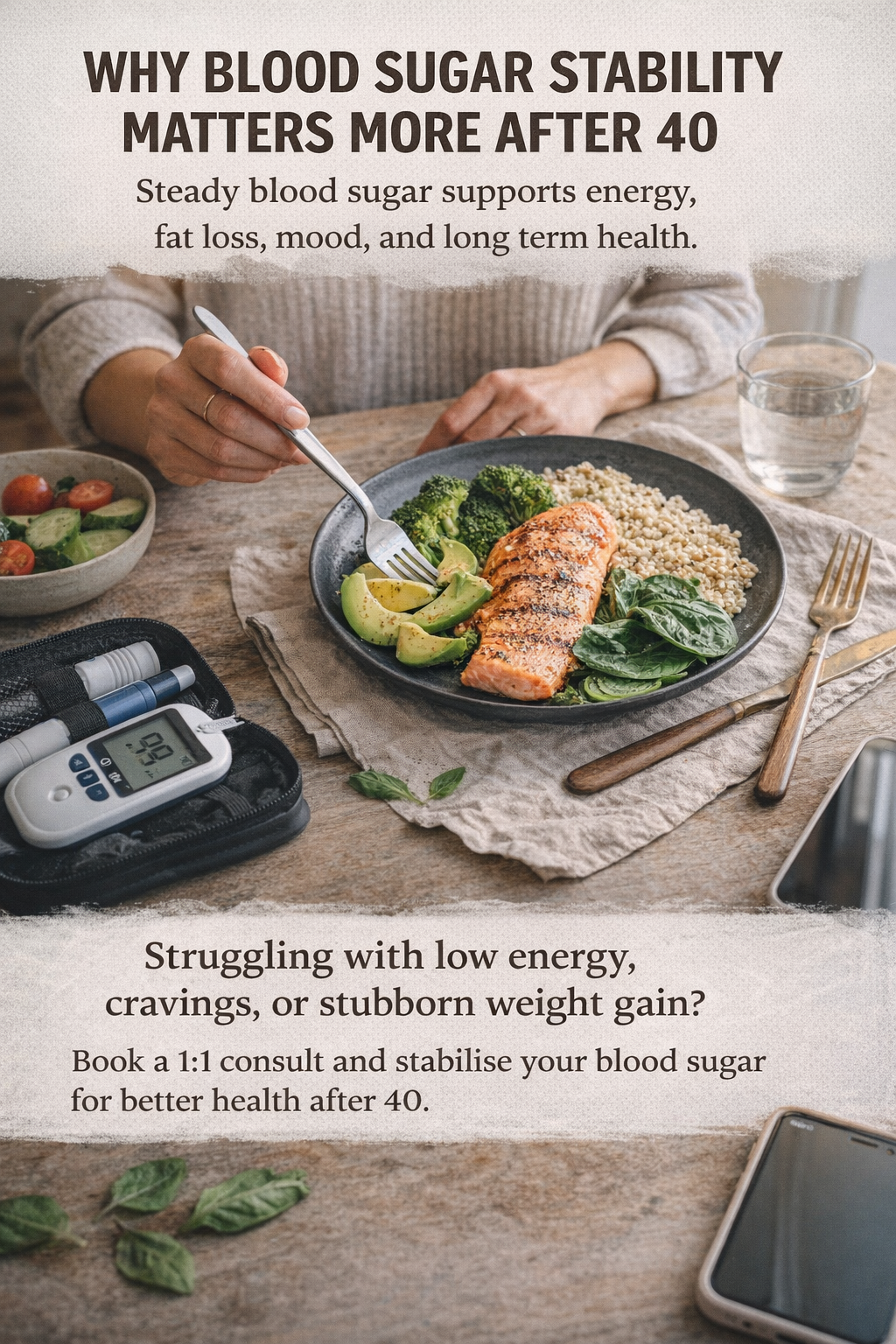
After 40, energy is not just about how much you sleep.
It is about how stable your blood sugar is throughout the day.
When blood sugar rises too quickly and drops too sharply, the body experiences it as stress. Repeated daily, this stress begins to affect metabolism, hormones, mood, and body composition.
What Happens When Blood Sugar Spikes
A high carbohydrate meal without enough protein, fibre, or fat can cause blood sugar to rise rapidly.
The body responds by releasing insulin to bring levels back down. If that drop happens quickly, you may feel:
Fatigue
Brain fog
Cravings
Irritability
Shakiness
A sudden need for caffeine or sugar
These are not random symptoms. They are physiological responses.
Over time, repeated spikes and crashes can contribute to:
Increased fat storage
Loss of muscle
Poor sleep
Hormonal imbalance
Insulin resistance
This becomes more significant after 40 because muscle mass naturally declines, stress resilience decreases, and hormonal shifts affect insulin sensitivity. The margin for metabolic instability becomes smaller.
The Hidden Blood Sugar Triggers
It is not just sweets that cause instability.
Common triggers include:
Skipping meals
Having coffee on an empty stomach
Low protein breakfasts
Ultra processed foods
Long gaps without eating
High stress with inadequate recovery
Even healthy foods eaten in isolation, such as fruit without protein or fat, can cause noticeable swings for some individuals.
What Stability Looks Like
Stable blood sugar feels like:
Steady energy
Fewer cravings
Clear thinking
Better sleep
Improved mood
Easier body composition changes
And it is built through consistent habits:
Protein at every meal
Fibre from vegetables first
Healthy fats for satiety
Regular meal timing
Strength training to preserve muscle
Managing stress effectively
It is not about perfection. It is about rhythm.
After 40, the body rewards consistency far more than extremes.
When blood sugar is stable, everything else becomes easier.
A Question Worth Asking
If you are experiencing energy crashes, constant cravings, stubborn weight gain, poor sleep, or afternoon fatigue, it may not be a willpower issue. It may be a blood sugar issue.
Take a moment to reflect on your daily patterns. Are you skipping meals, under eating protein, relying heavily on caffeine, or going long gaps without nourishment? These small habits accumulate over time.
If you would like clarity on what is happening in your body and a structured plan to stabilise your blood sugar, I invite you to book a one to one consultation. Understanding your physiology is the first step towards sustainable energy, strength, and long term health.
Warmly,
Milvia Pili
Functional Nutritional Therapyst