

Many people focus on diet when trying to stabilise blood sugar.
They reduce sugar.
They cut refined carbohydrates.
They try to “eat healthier.”
Yet blood sugar levels can still creep up, energy crashes continue, and cravings remain difficult to control.
What is often overlooked is one of the most powerful regulators of metabolic health:
Sleep.
And after 40, sleep quality can begin to change in ways that directly affect blood sugar regulation.
Sleep Is a Metabolic Regulator
During sleep, the body is not simply resting. It is actively regulating hormones, repairing tissues, and recalibrating metabolic systems.
Several key processes that influence blood sugar occur overnight, including:
• Insulin sensitivity restoration
• Cortisol rhythm regulation
• Appetite hormone balance
• Cellular repair and recovery
When sleep is shortened or disrupted, these systems cannot function optimally.
The result is a body that becomes less efficient at managing glucose the following day.
How Poor Sleep Affects Blood Sugar
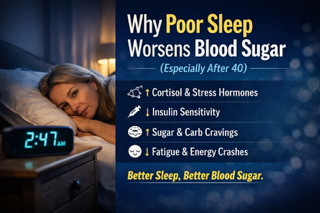
Even one night of inadequate sleep can reduce insulin sensitivity.
This means the body requires more insulin to move glucose from the bloodstream into the cells.
Over time, repeated poor sleep can contribute to:
• Higher fasting blood sugar
• Increased cravings for sugar and refined carbohydrates
• Afternoon energy crashes
• Increased hunger
• Gradual weight gain
These effects are not simply about willpower. They are biological responses to sleep deprivation.
The Role of Cortisol
Sleep disruption also affects the body’s primary stress hormone, cortisol.
When sleep is insufficient, cortisol levels tend to rise earlier and remain elevated longer during the day.
Cortisol signals the liver to release glucose into the bloodstream, ensuring the body has energy to respond to perceived stress.
When cortisol stays elevated, blood sugar levels can remain higher than necessary.
Why Sleep Changes After 40
Many adults notice that sleep becomes lighter or more fragmented during midlife.
Hormonal changes, increased life stress, and shifting circadian rhythms can all contribute to:
• Difficulty falling asleep
• Waking during the night
• Earlier waking in the morning
• Feeling less restored after sleep
Unfortunately, these disruptions occur at the same time when metabolic resilience may already be declining.
This combination can make blood sugar regulation more challenging.
Signs Sleep May Be Affecting Your Blood Sugar
Some subtle signs include:
• Craving sugar the day after poor sleep
• Feeling hungry soon after meals
• Afternoon fatigue requiring caffeine
• Difficulty concentrating
• Weight gain around the midsection
These symptoms often prompt stricter dieting, when the underlying issue may actually be sleep deprivation.
Supporting Better Sleep for Blood Sugar Balance
Improving sleep can have a powerful impact on metabolic health.
Some supportive habits include:
Maintaining consistent sleep times
Regular sleep and wake times help regulate circadian rhythms.
Reducing evening light exposure
Bright screens late at night can delay melatonin production.
Eating balanced evening meals
Meals that include protein, fibre, and healthy fats can support overnight blood sugar stability.
Creating a calming pre-sleep routine
Simple practices such as reading, stretching, or breathing exercises can signal the body that it is time to wind down.
Even small improvements in sleep quality can significantly improve how the body regulates blood sugar.
Sleep Is Not a Luxury
When blood sugar begins to rise, diet is often the first place people look.
But metabolic health is influenced by far more than food alone.
Sleep is one of the most powerful tools the body has to regulate hormones, restore insulin sensitivity, and maintain stable energy.
Protecting sleep is not a luxury.
It is a foundational part of long-term metabolic health.
Warm regards,
Milvia Pili
Functional Nutritional Therapy Practitioner