

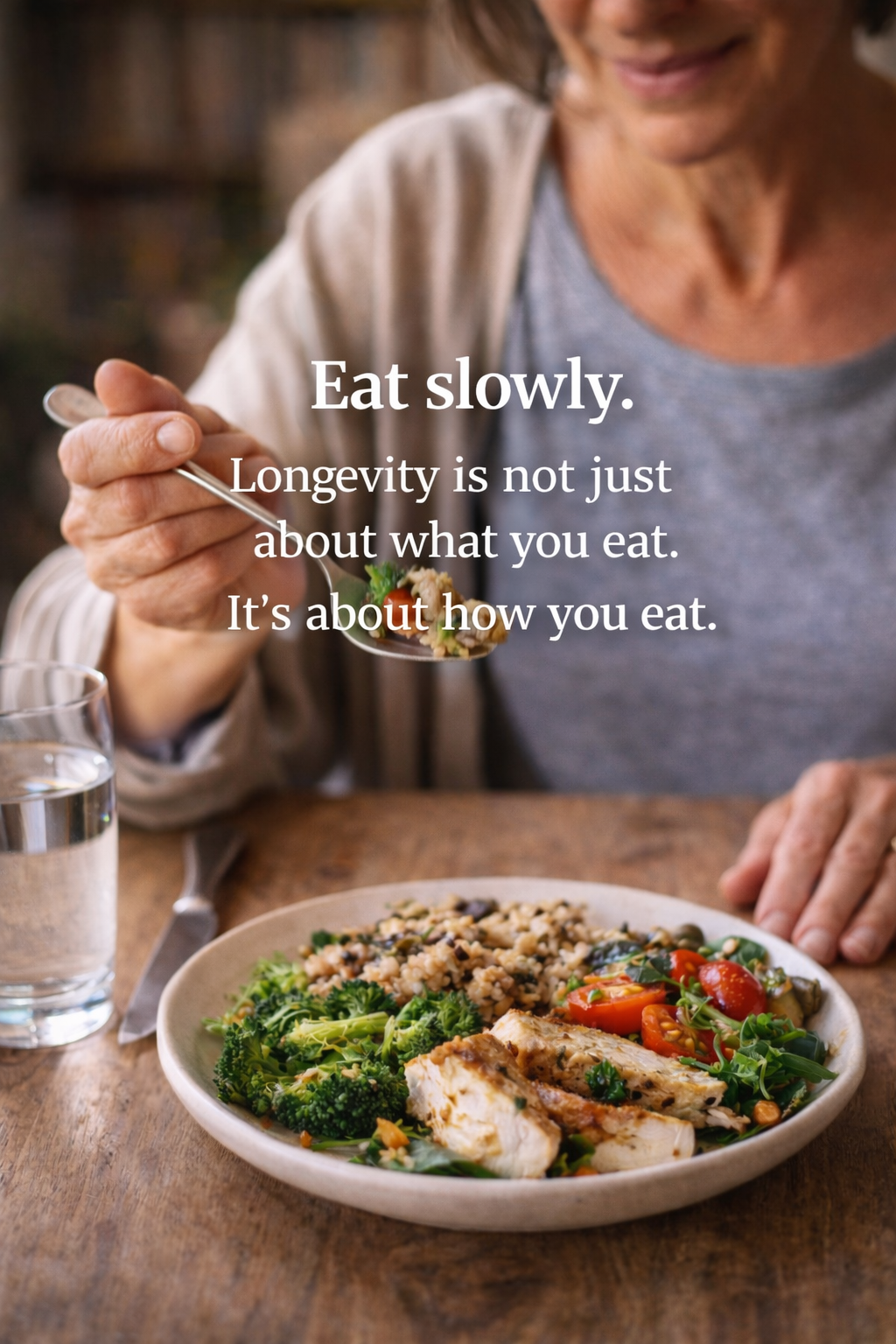
Most people focus on what they eat.
Few consider how fast they eat.
This simple habit can have a significant impact on digestion, metabolism and long-term health.
Why Eating Speed Matters
Digestion does not start in the stomach.
It starts in the mouth.
When meals are rushed, food is not properly broken down and the body has less time to prepare for digestion.
Over time, this can contribute to:
- Poor nutrient absorption
- Digestive discomfort
- Overeating
- Fluctuating energy levels
The Link to Longevity
It takes time for the body to register fullness.
When we eat quickly, we often consume more than we need before the body has time to signal that it is satisfied.
Slowing down supports:
- Better digestion
- Improved nutrient absorption
- More accurate hunger and fullness cues
- Reduced stress on the body
These small advantages build up over time and support healthy ageing.
A Pattern in Long-Living Communities
In many long-living cultures, meals are not rushed. They are part of a daily rhythm, a time to pause, connect and nourish the body.
This natural pace supports both physical health and overall wellbeing.
Simple Ways to Slow Down
You do not need to change everything at once. Small shifts can make a meaningful difference:
Put your cutlery down between bites
Create a natural pause during your meal.
Chew your food thoroughly
Allow your body to properly begin the digestive process.
Remove distractions
Avoid eating while working, scrolling or watching screens.
Take a moment before eating
A brief pause can help shift your body into a more relaxed state.
A Simple Reflection
Next time you eat, ask yourself:
“Am I rushing this meal, or allowing my body time to process it?”
Longevity is not just about the food you choose.
It is about how you eat, day after day.
Warm regards,
Milvia Pili
Functional Nutritional Therapy Practitioner