
.
Think about the people you know who are in their 70s. How many are still sharp, strong and free of serious illness? A huge 30-year study followed more than 105,000 people to find out who gets there, and the answer is sobering. Fewer than one in ten made it.
The study was published in Nature Medicine. Researchers tracked the eating habits of people from midlife, then checked them again at 70 and 75. They didn’t just ask who was still alive. They asked who had reached that age without major chronic disease, with a good memory, and with the physical ability to get on with life.
Only 9.3% did.
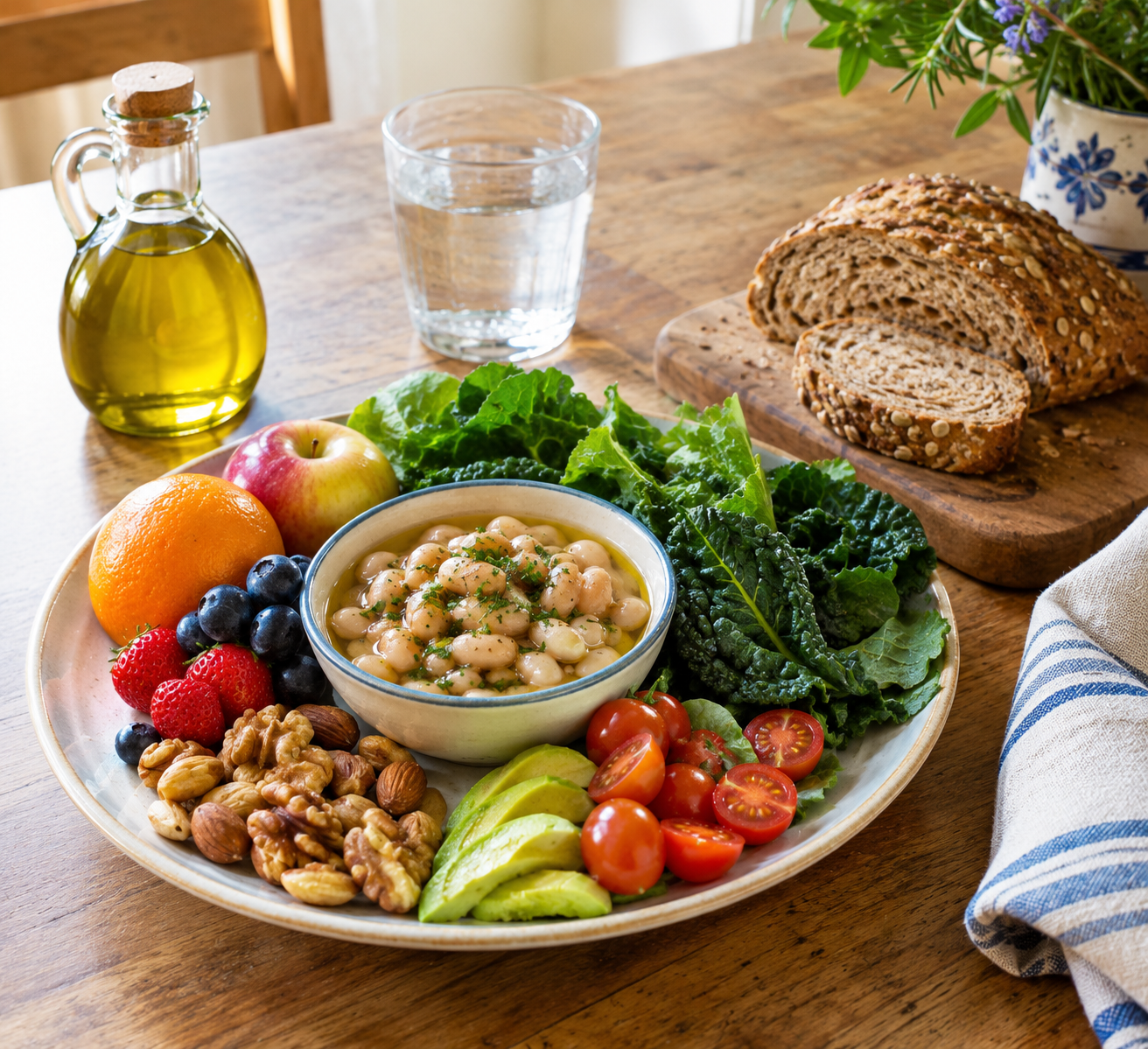
So what did the people who got there have in common? Their diets. The eating pattern most closely linked to healthy ageing was rich in vegetables, fruit, wholegrains, nuts, legumes and unsaturated fats, with low to moderate amounts of healthy animal foods. People who followed it most closely had an 86% greater likelihood of healthy ageing at 70.
And what did the others eat more of? Processed meat, sugary drinks, diet drinks and ultra-processed foods were the biggest culprits.
Look at that list again. There is no goji berry on it. No powder, no miracle supplement, no secret. It’s the beans in the soup, the vegetables on the plate, the fruit in season, the nuts, the olive oil. It’s what I grew up eating in Sardinia, and I’m not surprised the research points there.
Two honest points. This is an observational study, so it shows an association, not proof that food alone caused the result. The people studied were also health professionals, so the findings may not apply to everyone. The researchers themselves said there is no one-size-fits-all diet.
But the pattern is consistent with what I see every week. Healthy ageing isn’t won in your 70s. It’s built, plate by plate, in your 40s, 50s and 60s. And the encouraging news from a separate Swedish study of older adults is that it’s never too late to improve.
Want to know how your own plate compares? Get in touch and we’ll look at it together, and plan small changes that fit your life.
Prevention rather than cure.
Milvia Pili
Functional Nutritional Therapist