
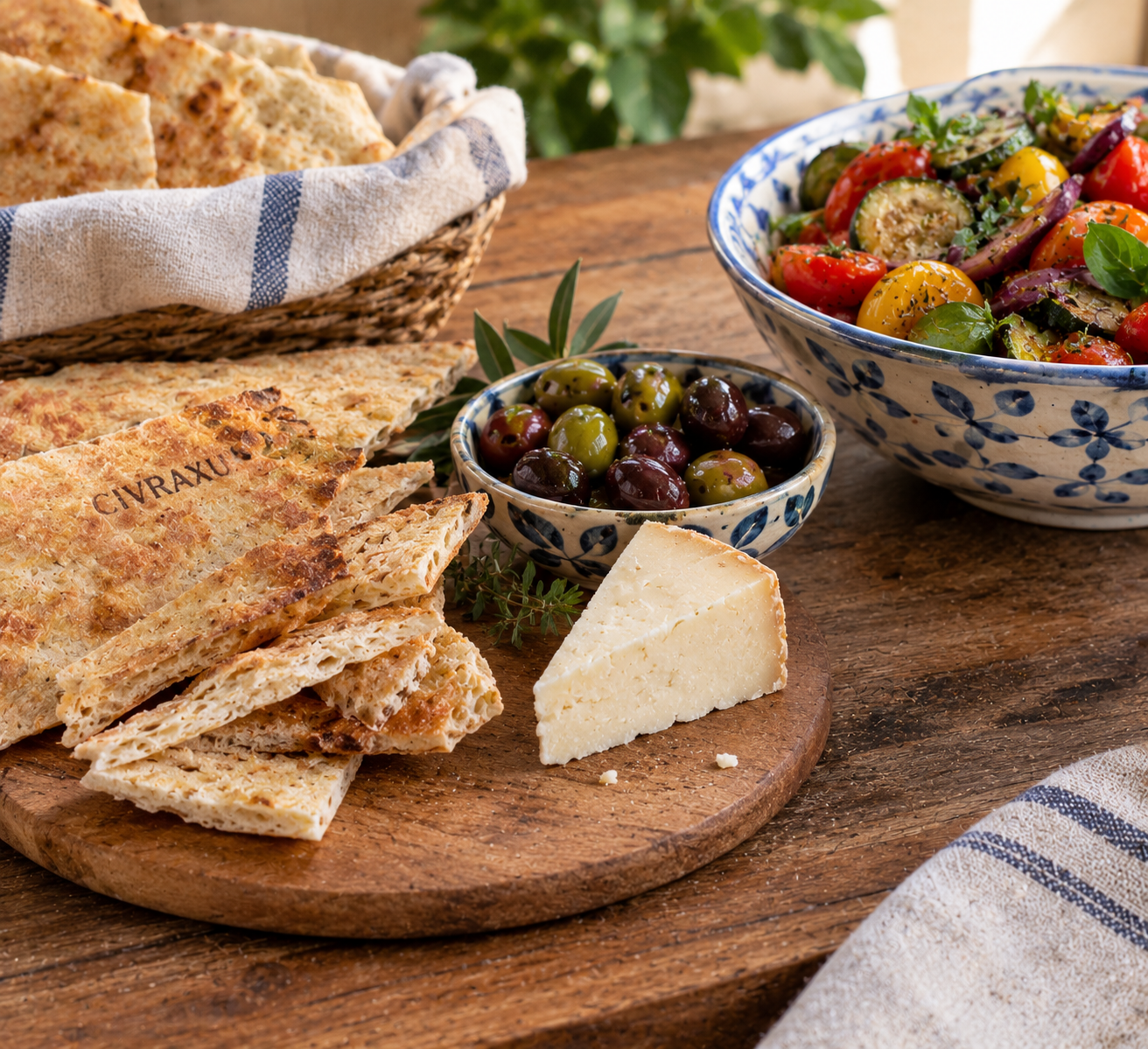
Goat’s and sheep’s milk and cheese top almost every list of “Sardinian longevity foods”. I grew up eating pecorino sardo, so I wanted to know what the research actually shows. The answer is more modest than the headlines, and more useful.
Start with the fact. Sardinians do eat a lot of goat’s and sheep’s dairy. A review of the Sardinian diet says they rely heavily on it. But that review is a narrative one, resting on indirect evidence, and the link it draws between Sardinian diet and longevity comes from population-level data, which can’t prove cause and effect. It is a good story. It isn’t proof.
What about cheese in general? The best evidence I found is a 2023 review in Advances in Nutrition, pooling 184 studies of cheese eaters. People eating the most cheese had about 8% lower risk of cardiovascular disease and about 5% lower risk of death from any cause than those eating the least, and the benefit levelled off at around 40g a day. The authors concluded that cheese has “neutral to moderate benefits”. Three honest caveats: these are observational studies, the certainty was moderate at best, and the studies mostly covered cheese in Europe and North America, not Sardinian sheep’s or goat’s cheese specifically.
What about goat’s and sheep’s milk itself? It is often described as easier to digest, and there is a theory behind it. Sheep and goat milk proteins are similar to the “A2” type of casein, which some researchers think is gentler on the gut. Some small human trials of A2 cow’s milk found fewer digestive symptoms, but they were short, and the European Food Safety Authority found no link between the suspect protein and harm. So it may suit some people, and it is not proven. It is also not lactose-free, and it is not suitable for people with a cow’s milk allergy.
And then there is the salt. Pecorino Romano, for example, can supply roughly a fifth of the recommended daily sodium in a single serving. Hard sheep’s cheeses are strongly flavoured, which is why a little goes a long way.
What about cellular ageing? I’ll be straight with you: nobody has shown that goat’s or sheep’s milk slows it. What we have is a food that fits a pattern.
That is the real Sardinian lesson. Dairy in my childhood was one part of a table full of vegetables, beans, wild greens, olive oil and bread, with very little sugar. Take the cheese out of that pattern and you lose the story.
So here is what I do and suggest. Enjoy a small portion of good cheese, around 40g, as a flavour rather than the main event. Try plain, unsweetened goat’s or sheep’s yoghurt. Watch the salt, and eat your cheese with vegetables and pulses.
Not sure how much dairy suits you? Get in touch and we’ll look at your plate together.
Prevention rather than cure.
Milvia Pili
Functional Nutritional Therapist