
I have spent years telling people what to put on their plate. But the strongest finding I know in longevity research isn’t about food at all.
In 2010, researchers pooled 148 studies covering more than 300,000 people. They found that those with stronger social relationships had about a 50% higher likelihood of survival over the follow-up period. That is a large effect, and it held across age, sex and starting health. Notice what it measures, though. It is about relationships in general, not meals.
So where does the table come in?
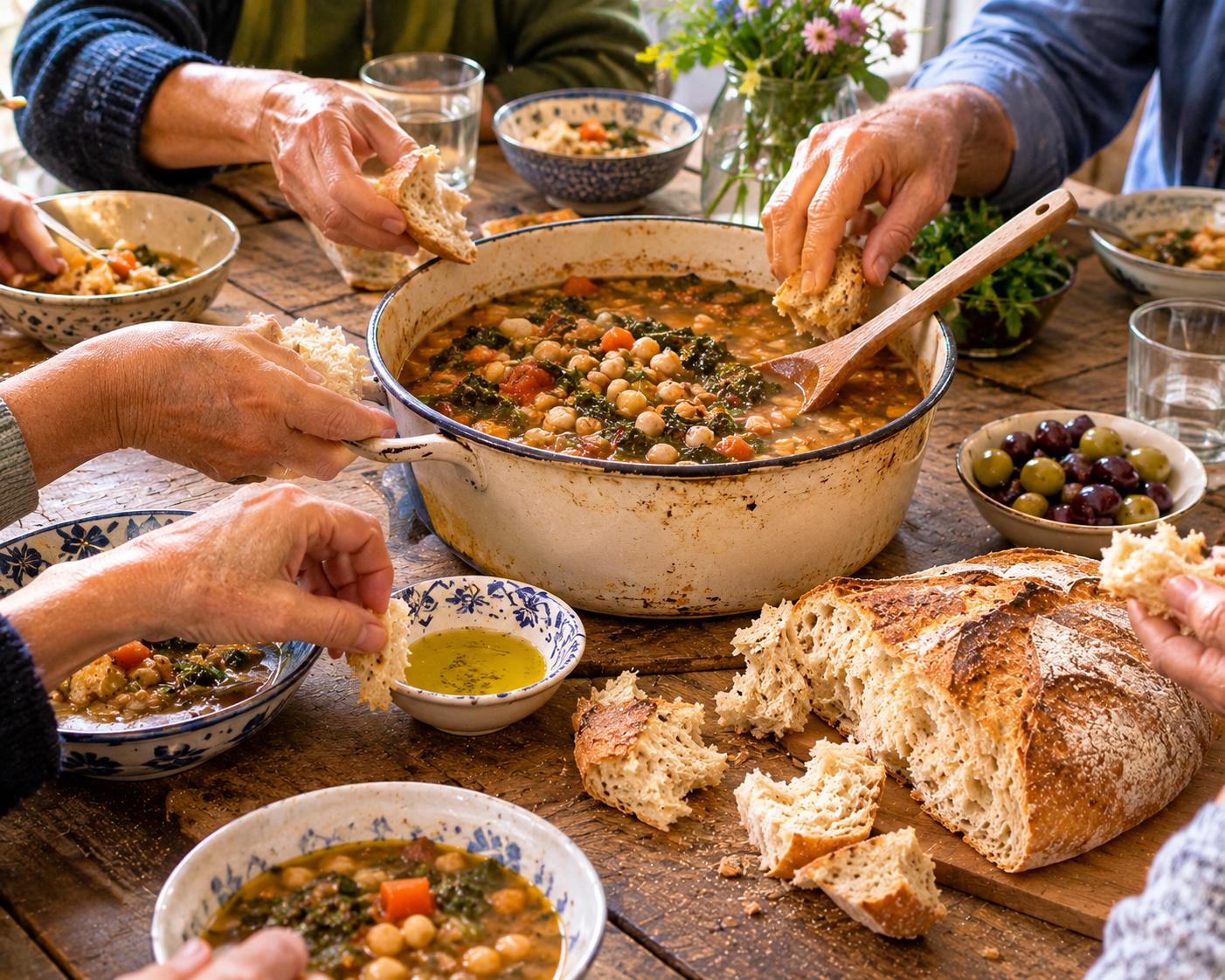
For me, it is where relationships happen. I grew up in a family of five. Meals were noisy, they took time, and nobody left halfway through. When the fisherman had been out on a Friday, the fish went on the table and everyone sat down to it together.
An Oxford study from 2017 found that people who eat with others more often tend to report being happier, having more friends and feeling more connected to their community. I need to be honest about its limits. It is an association, it relied on people reporting their own habits, and it was done with The Big Lunch, a charity that promotes shared meals. It does not prove that sharing a meal makes you live longer. What I take from it is simpler: the table is one of the easiest places to build the connection the bigger research says we need.
It is also why I never eat looking at a screen. If I am eating alone, I am still eating, not scrolling.
Here is what I would try:
- Share one meal with someone this week, in person or over a table, with phones put away.
- If you live alone, invite a neighbour or friend for soup. It does not need to be fancy.
- Cook the same meal for two instead of one. It is cheaper and easier, and it gets you talking.
- Eat without a screen, even when you are by yourself.
You can follow a flawless diet and still go without the one thing the research keeps pointing to, which is other people.
Want a longevity plan that fits your real life, including the people in it? Get in touch and we’ll build one together.
Prevention rather than cure.
Milvia Pili
Functional Nutritional Therapist