
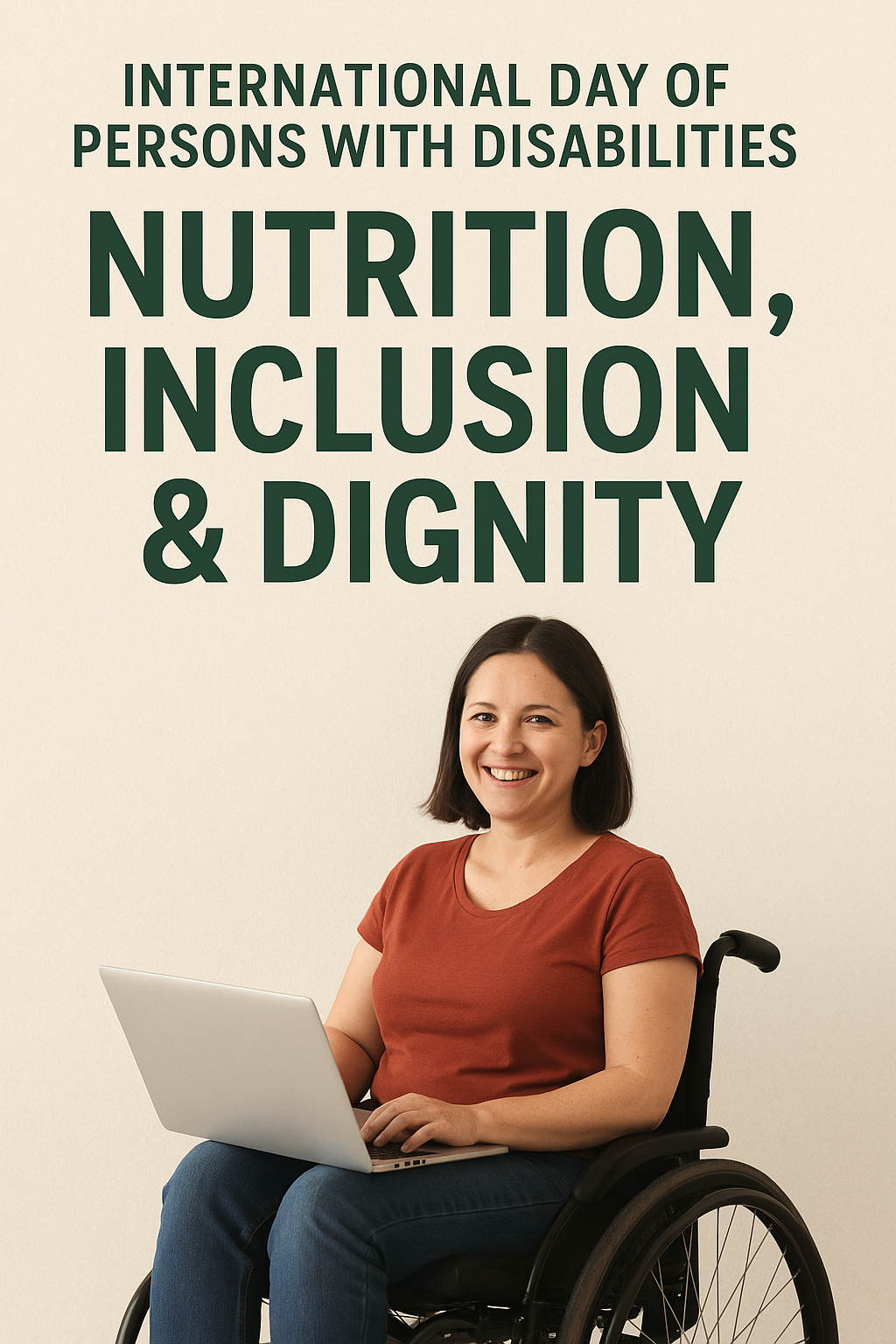
Honouring International Day of Persons with Disabilities**
Every year on December 3rd, the world observes the International Day of Persons with Disabilities (IDPD)—a day dedicated to recognising the rights, contributions, and lived experiences of more than one billion people worldwide.
But there’s an area that often goes unnoticed within this conversation:
✨ The right to accessible, personalised, and inclusive nutrition.
As a Nutritional Therapist, I see first-hand how people with disabilities—visible or invisible—often face unique barriers when it comes to health and wellbeing. And yet, good nutrition can play a transformative role in improving daily functioning, energy levels, cognitive clarity, and overall quality of life.
Today’s blog is about shining a light on this important intersection.
Why Nutrition Matters in Disability Inclusion
Nutrition isn’t only about food—
It’s about access, autonomy, dignity, and support.
Many individuals living with disabilities experience challenges such as:
- Limited energy or mobility, making meal planning or prep difficult
- Reliance on carers or family, reducing independence in food choices
- Medication interactions that influence hunger, digestion, or nutrient absorption
- Chronic pain or fatigue, which can affect appetite and nutrient needs
- Sensory sensitivities, often seen in neurodivergent individuals
- Digestive issues, common in many long-term conditions
- Financial barriers, limiting access to fresh, nutritious food
This means conventional nutrition advice simply doesn’t apply.
We need adaptive, compassionate, lived-experience-informed guidance that meets people where they are.
The Foundations of Inclusive Nutrition
Here are key principles I prioritise when supporting clients with disabilities:
1. Personalised Nutrition Over “One-Size-Fits-All”
Every body has a different baseline, different needs, and different challenges. Tailored nutritional support ensures realistic, achievable progress—not overwhelming idealism.
2. Energy-Conserving Meal Strategies
Chronic pain, fatigue, and mobility conditions require:
- Simple prep meals
- Batch cooking
- Slow-cooker or one-pan options
- Ready-washed and chopped produce
- Accessible kitchen adaptations
Nutrition should reduce stress, not add to it.
3. Support for Gut Health
Many conditions—from neurological to autoimmune—are linked with digestive imbalance.
Gentle, phased interventions often help such as:
- Increasing fibre gradually
- Adding fermented foods (where tolerated)
- Supporting hydration
- Minimising ultra-processed foods that worsen inflammation
4. Sensory & Texture Adaptations
For individuals with sensory sensitivities, texture aversions or swallowing difficulties:
- Smoothies
- Soups
- Soft-cooked meals
- Blended sauces
can make nourishment easier and more comfortable.
5. Considering Medication & Nutrient Interactions
Some medications impact:
- Appetite
- Blood sugar
- Digestion
- Vitamin absorption
- Fatigue levels
Nutritional support must be informed, cautious, and aligned with the person’s wider healthcare team.
6. Promoting Autonomy & Emotional Safety
Food is deeply personal.
Nutrition support must empower — not shame.
Everyone deserves to feel capable, supported, and respected in their wellbeing journey.
Creating a More Inclusive Wellness World
On this International Day of Persons with Disabilities, I’m inviting all of us to rethink how we speak about health.
We must move away from:
❌ unrealistic expectations
❌ perfectionism
❌ “clean eating” pressure
❌ productivity-driven wellness
And move toward:
✨ accessibility
✨ flexibility
✨ dignity
✨ empowerment
✨ joy in food
✨ sustainable habits
Because health equity includes nutrition equity.
A Final Word
If you’re reading this and living with a disability — visible or invisible — know this:
🌿 You deserve support.
🌿 You deserve nourishment.
🌿 You deserve a health plan created for your body, your life, and your needs.
🌿 And you deserve a wellbeing journey rooted in compassion, not pressure.
If you would like personalised nutritional support tailored to your lived experience, I’m here to help.
Warmly,
Milvia Pili
Nutritional Therapist & Wellbeing Practitioner