

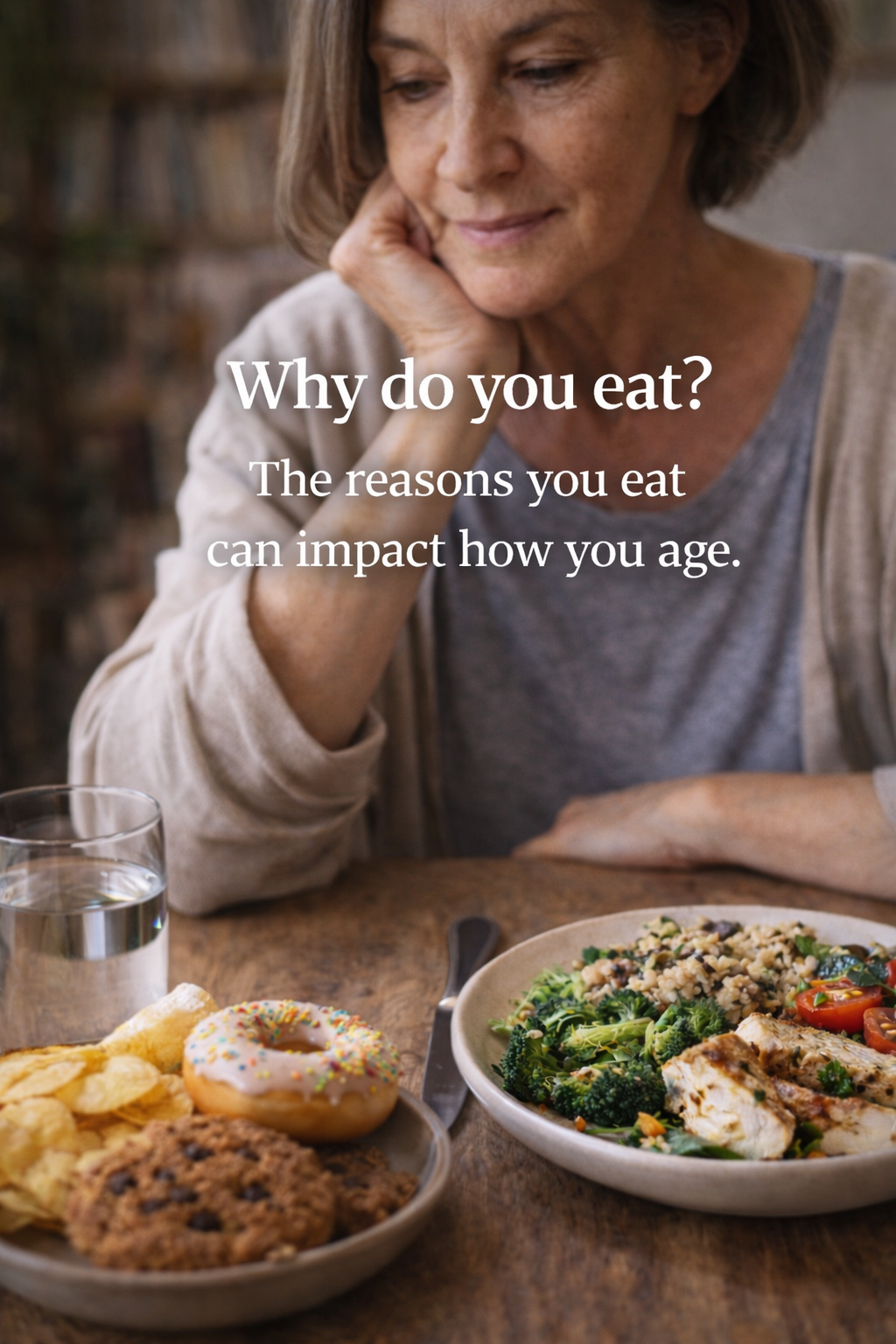
Most people think eating is purely physical.
In reality, it is often emotional, habitual and social.
Understanding why you eat may be one of the most powerful steps you can take for long-term health and longevity.
Beyond Hunger
Not all eating is driven by hunger.
Many people eat because they are:
- Stressed
- Tired
- Bored
- Socialising
- Following routine rather than need
There is nothing wrong with this. However, when it becomes automatic, it can lead to patterns that work against long-term health.
Why This Matters for Longevity
When eating is disconnected from true hunger, it becomes easier to:
- Overeat
- Choose less nourishing foods
- Disrupt natural hunger and fullness signals
Over time, this can impact energy levels, metabolic health and overall resilience.
Longevity is not only about nutrients.
It is also about awareness.
A Pattern in Long-Living Communities
In many long-living cultures, food is more than fuel.
Meals are connected to:
- Family
- Community
- Routine
- Purpose
People eat with intention, not distraction. This creates a healthier relationship with food and supports both physical and emotional wellbeing.
Simple Ways to Reconnect with Why You Eat
You do not need to change everything at once. Start with awareness:
Pause before eating
Ask yourself if you are physically hungry or responding to something else.
Create structure
Regular meal times reduce impulsive eating.
Be present during meals
Focus on the experience rather than distractions.
Allow enjoyment without guilt
Food is not just fuel. It is also part of life and connection.
A Simple Reflection
Next time you reach for food, ask:
“Am I eating because I am hungry, or for another reason?”
Longevity is not just about what is on your plate.
It is about your relationship with food, day after day.
Warm regards,
Milvia Pili
Functional Nutritional Therapy Practitioner