
Every January, millions of people set ambitious health goals. Eat better. Lose weight. Exercise more. Be more disciplined. Yet by mid-February, most resolutions have quietly fallen away.
This isn’t because people lack motivation or willpower. It’s because most resolutions are built on systems that don’t work — especially for adults over 40.
Lasting health is not created through extremes. It’s built through realistic nutrition, sustainable habits, and an understanding of how the body actually functions.
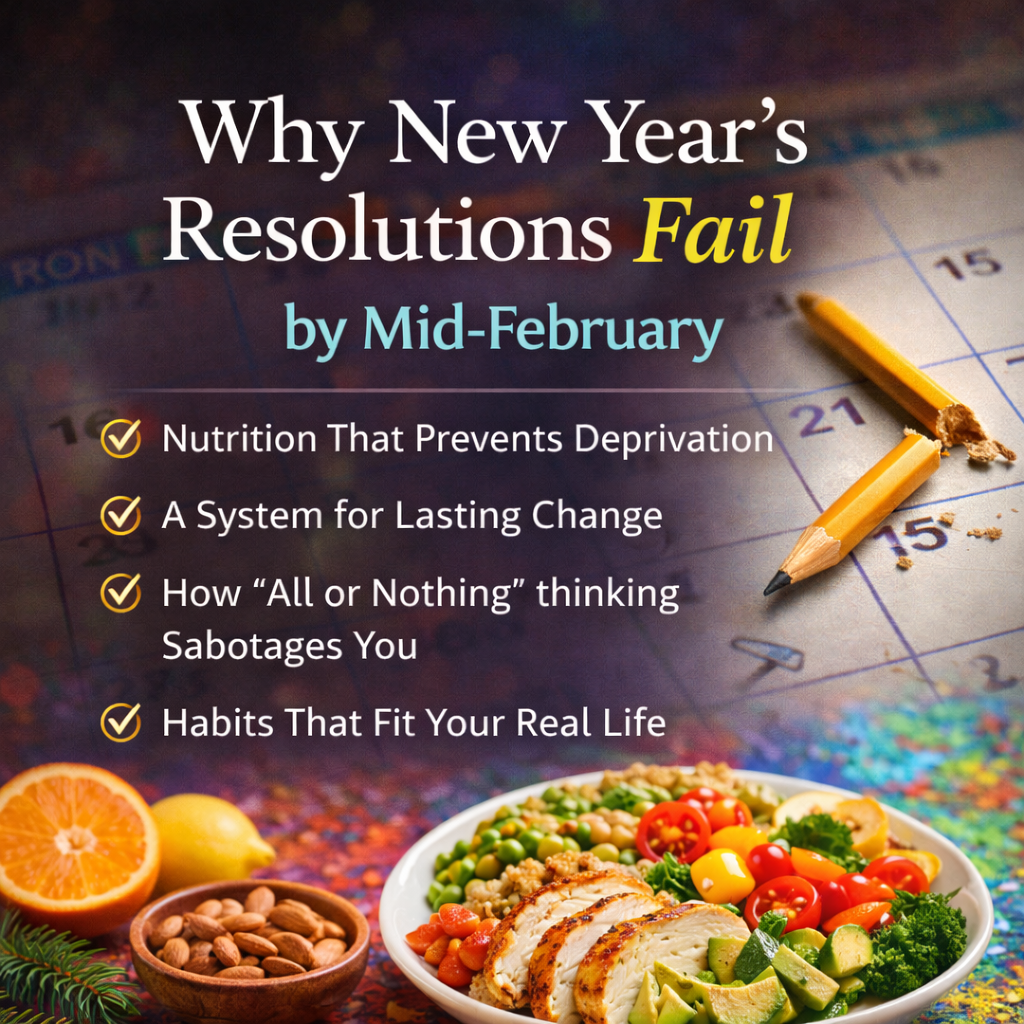
1. Nutrition That Increases Energy and Prevents Disease — Without Deprivation
One of the biggest reasons resolutions fail is because they rely on restriction. Cutting out foods, skipping meals, or following rigid rules may work briefly, but they rarely support long-term health.
After 40, the body needs nourishment to function well. Deprivation increases stress hormones, destabilises blood sugar, disrupts sleep, and often leads to fatigue and cravings.
Nutrition that supports energy and long-term health focuses on:
- Regular meals to stabilise blood sugar
- Adequate protein to support muscle, metabolism, and hormones
- Fibre-rich foods to support gut health, cholesterol, and inflammation
- Healthy fats to support satiety and brain function
This approach supports the body rather than fighting it — and that’s why it lasts.
2. The Science-Backed System for Lasting Change
Sustainable change is not about motivation. It’s about systems.
Research consistently shows that habits stick when they are:
- Small and repeatable
- Anchored to existing routines
- Flexible rather than rigid
- Designed to reduce stress, not add to it
When nutrition and lifestyle changes are realistic, the nervous system stays calmer, decision fatigue decreases, and consistency becomes easier.
This is why extreme plans fail — they rely on constant effort rather than supportive structure.
3. Why “All or Nothing” Thinking Sabotages Your Health
“All or nothing” thinking is one of the most damaging patterns in health behaviour.
One missed workout. One indulgent meal. One busy week — and the entire plan feels ruined.
This mindset increases guilt, discouragement, and the urge to give up altogether. Over time, it reinforces the cycle of starting and stopping that many people experience year after year.
Health is not built in perfect weeks. It’s built through what you return to after life happens.
Progress comes from consistency, not perfection.
4. How to Build Habits That Fit Your Real Life
The most successful health habits are the ones that fit into your actual life — not an idealised version of it.
That means:
- Planning meals that suit your schedule
- Allowing flexibility for social events and busy periods
- Prioritising nourishment even when time is limited
- Choosing habits you can maintain on your worst days, not just your best
When habits support your life rather than compete with it, they become part of who you are — not something you constantly have to “start again”.
A Different Way Forward
If your resolutions have failed in the past, it doesn’t mean you failed. It means the approach wasn’t right for you.
Health after 40 is about working with your body, not against it. With the right support, steady nutrition, and realistic systems, lasting change is not only possible — it becomes natural.
Warmly,
Milvia Pili, FNTP
Functional Nutritional Therapy Practitioner