
For many years, protein was seen primarily as something for athletes, bodybuilders, or those focused on performance.
After 40, that perception needs to change.
Protein is no longer optional. It becomes foundational.
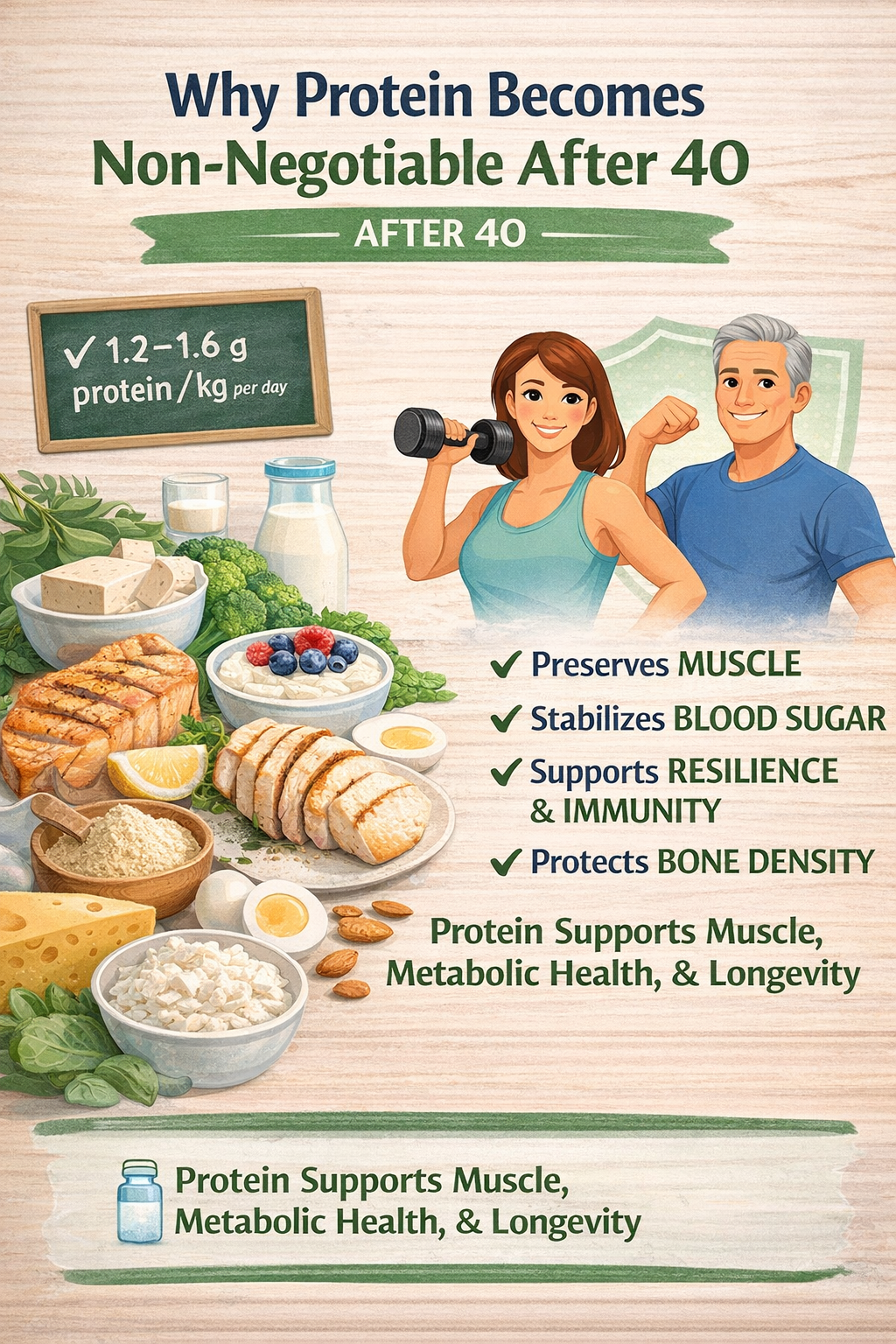
From our mid-30s onwards, we begin to lose muscle mass gradually — a process known as sarcopenia. Without intentional support, this muscle loss accelerates with each decade. But muscle is not simply about strength or appearance. It plays a central role in blood sugar regulation, metabolic stability, immune resilience, bone density, and long-term independence.
In other words, muscle is metabolic insurance.
And protein is what protects it.
Muscle, Metabolism, and Ageing
Muscle tissue acts as a reservoir for glucose. When we eat, healthy muscle helps absorb and store glucose efficiently, preventing sharp blood sugar spikes and crashes. As muscle mass declines, blood sugar regulation becomes less efficient, increasing the strain on the metabolic system.
This is one reason why midlife often brings new challenges:
- Energy fluctuations
- Increased cravings
- Slower recovery
- Changes in body composition
It is not simply “age.”
It is physiology responding to shifting muscle mass and hormonal signals.
Supporting muscle is one of the most powerful longevity strategies available — and adequate protein intake is central to that.
Why Protein Needs Increase After 40
As we age, the body becomes less responsive to smaller amounts of protein. This is known as “anabolic resistance.” In practical terms, it means that the body requires more protein to stimulate muscle repair and maintenance than it did in earlier years.
Yet many adults, especially women, undereat protein — often unintentionally.
Breakfast may be toast or fruit.
Lunch may be light.
Dinner may carry most of the day’s protein.
This pattern leaves long gaps without sufficient amino acids to support muscle preservation.
Consistency matters.
Just as your body thrives on predictable meal timing, it also benefits from steady protein distribution across the day.
What Does “Enough” Look Like?
While individual needs vary, a general longevity-focused guideline for adults over 40 is:
- Approximately 1.2–1.6 grams of protein per kilogram of body weight per day
For many people, this is higher than they realise.
Equally important is distribution:
- Include a meaningful protein source at every meal
- Aim for roughly 25–35 grams per meal depending on body size
This could look like:
- Eggs, Greek yogurt, or protein-rich breakfast options
- Fish, poultry, tofu, or legumes at lunch
- Quality protein again at dinner
Protein is not about excess.
It is about adequacy.
Protein Is a Longevity Strategy
In cultures associated with longevity, meals are consistent, nourishing, and protein is present — not extreme, but reliable.
After 40, health is rarely built through restriction.
It is built through preservation.
Preserving muscle.
Preserving metabolic stability.
Preserving resilience.
Protein supports all three.
If you’ve been focused solely on calories or eating “less,” this may be the missing piece.
Small, consistent changes create powerful long-term effects.
If you’d like personalised guidance on how to optimise protein intake for muscle, blood sugar stability, and long-term health, I’m currently welcoming a limited number of one-to-one consultations.
Your future strength is something you can support today.
Warmly,
Milvia Pili
Functional Nutritional Therapy Practitioner