
If you have seen headlines about ultra processed foods yesterday, you not imagining it. The topic has returned to the spotlight once again.
Researchers, doctors, and public health bodies are raising concerns about how much of our daily diet now comes from industrially manufactured products rather than real, whole foods.
So what is driving this renewed attention, and why does it matter?
What Are Ultra Processed Foods
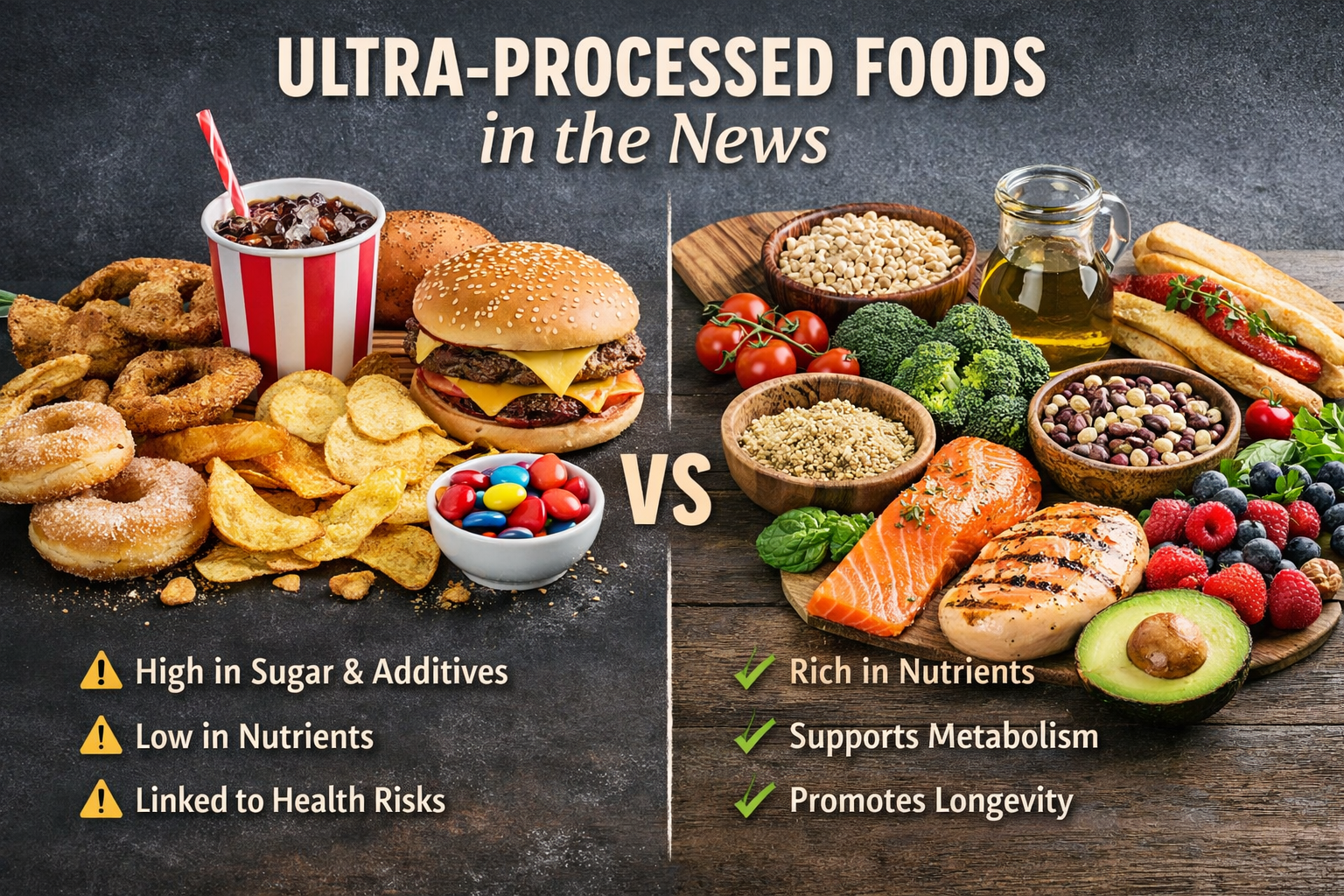
Ultra processed foods, often referred to as UPFs, are industrial formulations made mostly or entirely from substances extracted from foods or created in laboratories. These products often contain ingredients you would not use in a home kitchen, such as emulsifiers, flavour enhancers, stabilisers, artificial colours, and preservatives.
They are typically designed to be highly palatable, convenient, and long lasting.
Examples include packaged snacks, sweetened breakfast cereals, ready meals, processed meats, sugary drinks, and many commercially produced baked goods.
Why They Are Back in the Headlines
Recent reports have highlighted just how dominant these foods have become in modern diets. In many high income countries, ultra processed foods make up more than half of total daily calorie intake.
There has also been concern about the presence of ultra processed ingredients in products marketed to children, including baby and toddler foods. This has raised important questions about early exposure and long term health patterns.
At the same time, researchers continue to publish studies linking high intake of ultra processed foods with increased risk of obesity, type 2 diabetes, cardiovascular disease, and other chronic conditions, even in young children.
The conversation is shifting from individual choice to the wider food environment and how heavily it is shaped by industrial production.
What This Means for Metabolic Health
From a physiological perspective, diets high in ultra processed foods often lead to:
• Higher sugar and refined carbohydrate intake
• Lower fibre consumption
• Reduced micronutrient density
• Increased inflammatory load
• Greater blood sugar instability
Over time, this combination places stress on the metabolic system.
For those over 40, this becomes even more relevant. Muscle preservation, blood sugar regulation, hormonal balance, and recovery all depend on consistent nutrient quality. When ultra processed foods dominate the diet, they displace the whole foods that support these systems.
Longevity is not built on convenience. It is built on nourishment.
A Balanced Perspective
This is not about fear or perfection.
Not every packaged product is harmful. Some minimally processed foods such as canned beans, frozen vegetables, or certain fortified products can support a balanced diet.
The key difference lies in whether the product resembles real food and whether it contributes nutrients or simply calories.
The more your meals are built around whole foods such as vegetables, quality protein, legumes, nuts, seeds, whole grains, and healthy fats, the more stable your energy and metabolism are likely to be.
Practical Steps
If you want to reduce your reliance on ultra processed foods, start simply:
• Read ingredient lists. Fewer and recognisable ingredients are usually a good sign.
• Build meals around fibre, protein and fat first.
• Cook at home more often when possible.
• Do not aim for perfection. Aim for consistency.
Small shifts made regularly create meaningful long term change.
Ultra processed foods are back in the news because the evidence is accumulating. But you do not need to wait for policy changes to protect your health.
Every meal is an opportunity to send your body a signal of safety, stability, and nourishment.
Warmly,
Milvia Pili
Functional Nutritional Therapy Practitioner