

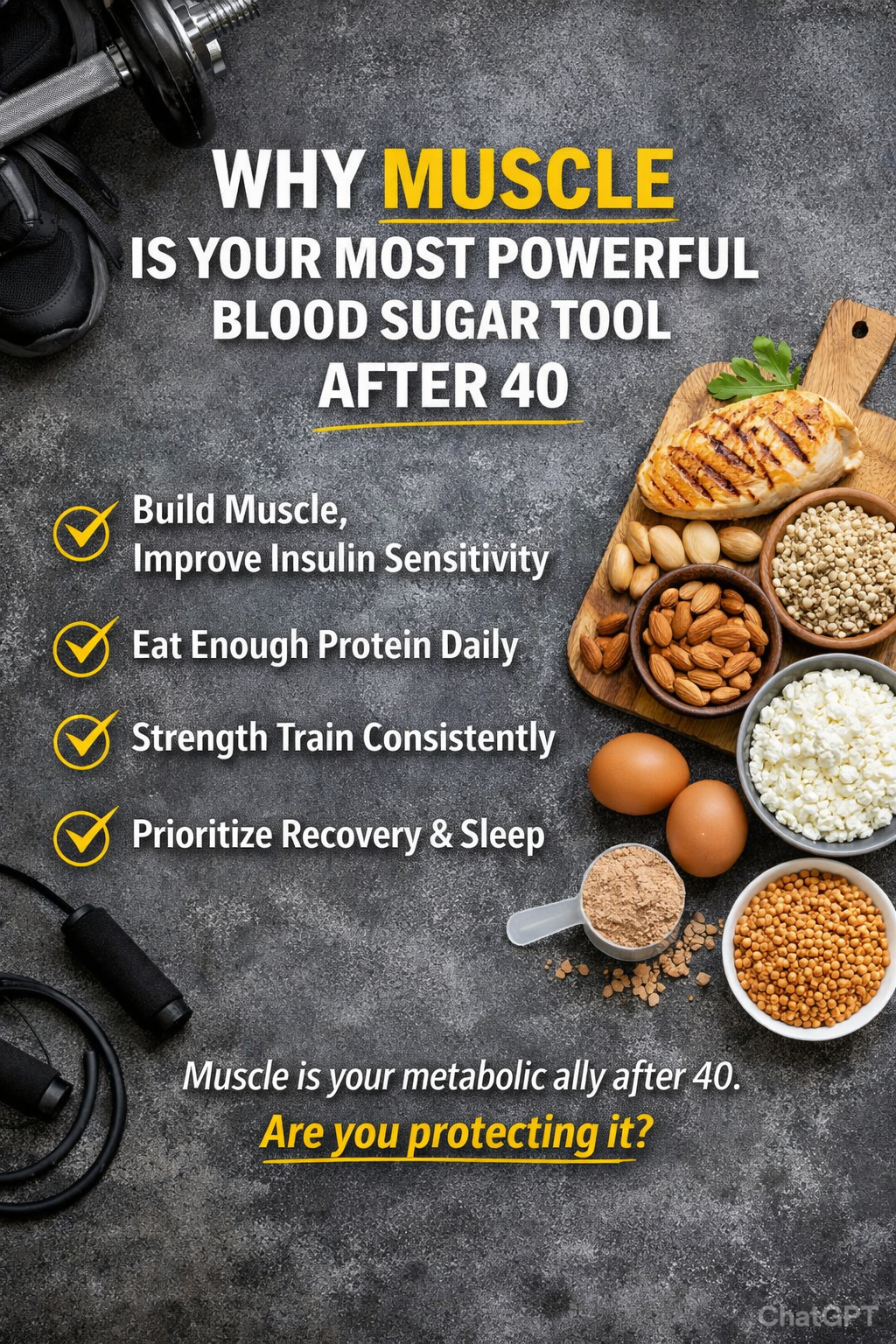
We have been talking about blood sugar stability and why it matters more after 40.
Today we go deeper.
If there is one tissue in your body that determines how well you regulate blood sugar, it is not your pancreas.
It is your muscle.
After 40, we naturally begin to lose muscle mass. This process, known as age related muscle decline, accelerates if we are inactive or under eat protein.
Why does this matter?
Because muscle acts as a storage site for glucose.
When you eat carbohydrates, glucose enters the bloodstream. Insulin helps move that glucose into cells. Muscle tissue is one of the primary destinations.
The more healthy muscle you have, the more efficiently your body can clear glucose from the blood.
Less muscle means:
Reduced insulin sensitivity
Higher likelihood of blood sugar spikes
Greater fat storage
More unstable energy
Increased metabolic risk over time
Muscle is not just about aesthetics.
It is a metabolic organ.
After 40, preserving and building muscle becomes a strategic priority for long term health.
So how do we protect it?
First, strength training. Resistance training improves insulin sensitivity and stimulates muscle protein synthesis.
Second, adequate protein intake. Many adults over 40 significantly under consume protein, particularly at breakfast.
Third, consistent nourishment. Chronic under eating, skipping meals, and excessive dieting can accelerate muscle loss.
Fourth, recovery and sleep. Muscle repair happens when we rest.
If blood sugar feels harder to manage than it once was, or body composition is shifting despite similar habits, muscle may be part of the equation.
We often focus on cutting carbohydrates.
But the more powerful question may be:
Are we protecting the tissue that helps us handle them?
After 40, metabolic resilience is built through strength, nourishment, and consistency.
If you would like support assessing your current muscle supporting habits and blood sugar patterns, I invite you to book a consultation. Together we can build a strategy that supports energy, body composition, and long term health.
Muscle is not optional after 40. It is protective.
Warmly,
Milvia Pili
Functional Nutritional Therapy Practitioner