

Have you ever noticed how quickly we dismiss symptoms these days?
“It’s just my age.”
“Everyone feels tired.”
“I’ve always had digestive issues.”
“My sleep has never been great.”
“It’s probably just stress.”
Somewhere along the way, we’ve started treating symptoms as though they’re a normal part of life.
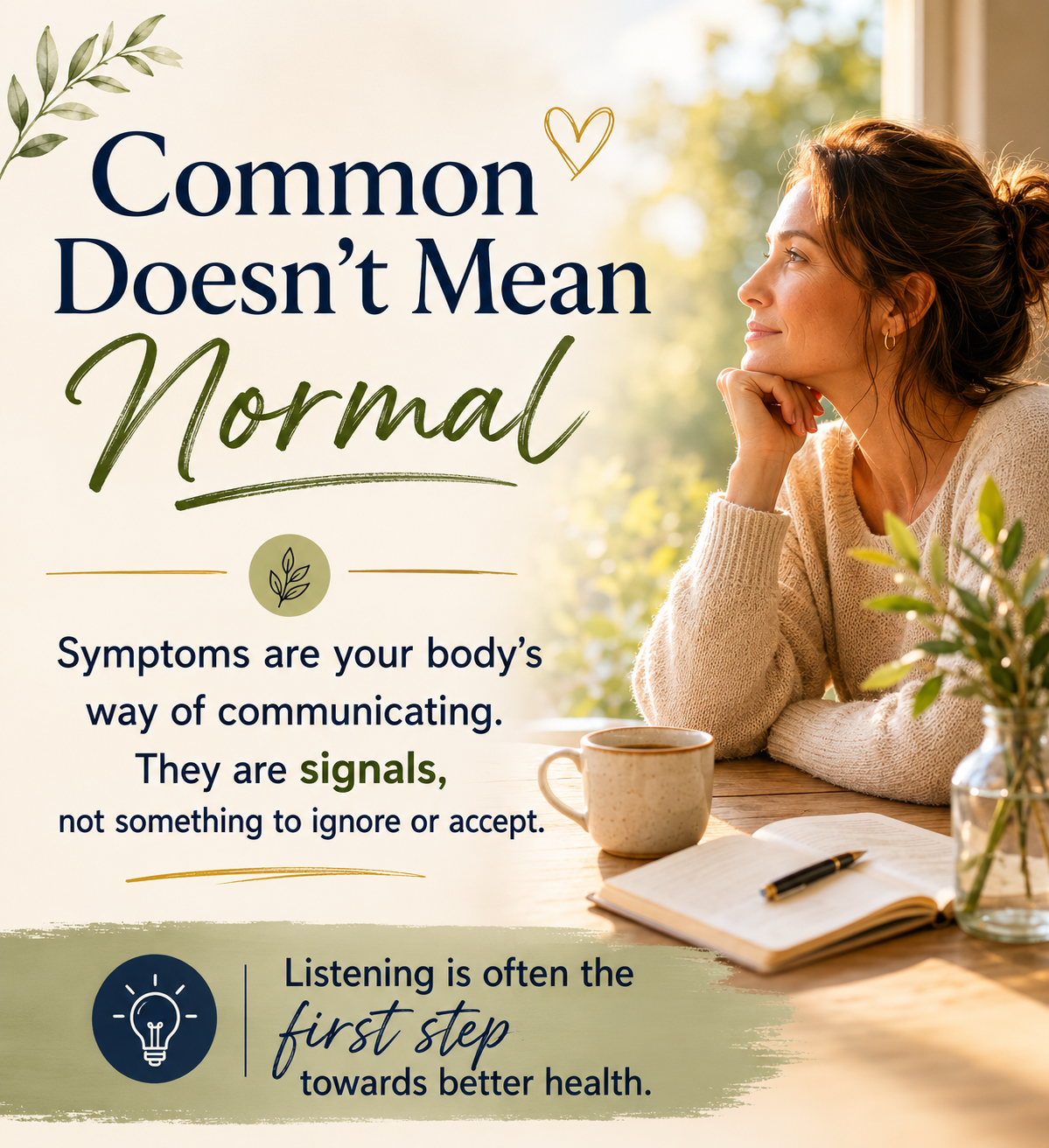
But common and normal are not the same thing.
Just because something affects millions of people does not mean it should be accepted as a normal state of health.
Feeling bloated after every meal may be common, but that doesn’t make it normal.
Needing several cups of coffee just to get through the day may be common, but that doesn’t make it normal.
Waking up exhausted, struggling with brain fog, relying on antacids, experiencing constipation or living with aches and pains may be common, but they are not necessarily signs of a healthy body.
The problem is that when symptoms become widespread, we begin to accept them as part of everyday life.
We stop asking questions.
We stop looking for causes.
We simply learn to live with them.
As a Functional Nutritional Therapist, I often meet people who have been experiencing symptoms for years. They have adjusted to feeling less than their best and no longer remember what good health feels like.
Yet symptoms are often the body’s way of communicating with us.
They are signals.
Signals that something may be out of balance.
Perhaps it is poor sleep. Perhaps it is chronic stress. Perhaps it is blood sugar instability, nutrient deficiencies, digestive dysfunction or an imbalance within the gut microbiome.
Whatever the cause, symptoms should encourage curiosity rather than resignation.
One of the things that fascinates me about the Blue Zones is that many people remain active, independent and engaged well into later life. They do not necessarily accept poor health as an inevitable consequence of ageing.
Instead, their lifestyles support health long before disease develops.
They move naturally.
They eat simple, nourishing foods.
They prioritise community and purpose.
They manage stress in ways that are woven into daily life.
Their approach reminds us that health is not built when disease appears. It is built every day through the choices we make.
So I have a question for you.
What symptom have you accepted as “normal” simply because you’ve lived with it for so long?
Fatigue?
Poor sleep?
Digestive discomfort?
Brain fog?
Perhaps today is the day to stop dismissing it and start paying attention.
Your body may be trying to tell you something important.
Listening is often the first step towards better health.
Prevention rather than cure.
Milvia Pili,
Functional Nutritional Therapist
Blue Zone Nutrition