
In Sardinia, traditional bread such as su moddizzosu is made with a sourdough starter, flour, water and salt. In the UK, any loaf can legally be called sourdough, whatever is in it.
I grew up eating Sardinian breads, and civraxiu was my favourite. Su moddizzosu is another traditional one, made with durum wheat semola, flour, water, salt and a sourdough starter, and nothing else. The starter is a living community of wild yeasts and bacteria. A 2026 study of 13 traditional starters from the Sardinian village of Villaurbana found they were dominated by one group of lactic acid bacteria and held six species of yeast, with genetic lineages that differed from industrial strains. Each starter, in other words, is its own tradition.
What does slow fermentation do? Whole grains contain phytic acid, which binds minerals such as iron, zinc and magnesium and makes them harder to absorb. Sourdough fermentation can reduce phytic acid, and more than ordinary yeasted bread does, so it may help you absorb more of those minerals. Most of that evidence comes from laboratory measurements of the bread itself.
The blood sugar story is less clear, and I’d rather tell you that than oversell it. Some studies show a lower blood sugar response after sourdough. But a 2026 systematic review in Frontiers in Nutrition described the human evidence as inconsistent, and very low in certainty for healthy people. Which? points out that for calories, fibre, fat, sugar and salt, sourdough is not that different from normal bread. And it still contains gluten, so it is not suitable for people with coeliac disease.
So why is it in a longevity conversation? Because most of us eat bread nearly every day, and small differences in how a food affects blood sugar and mineral absorption add up over years. I won’t claim sourdough slows cellular ageing, as no study shows that. It is a sensible choice, not a miracle.
The bigger problem is the label. In the UK, “sourdough” is not a legally protected term, so any bread can technically use it. Some supermarket loaves rely on added commercial yeast, and Which? found others contain ingredients such as ascorbic acid, and in the past, vinegar to imitate the tang. The Real Bread Campaign calls these loaves “sourfaux”.
Here is how to find the real thing:
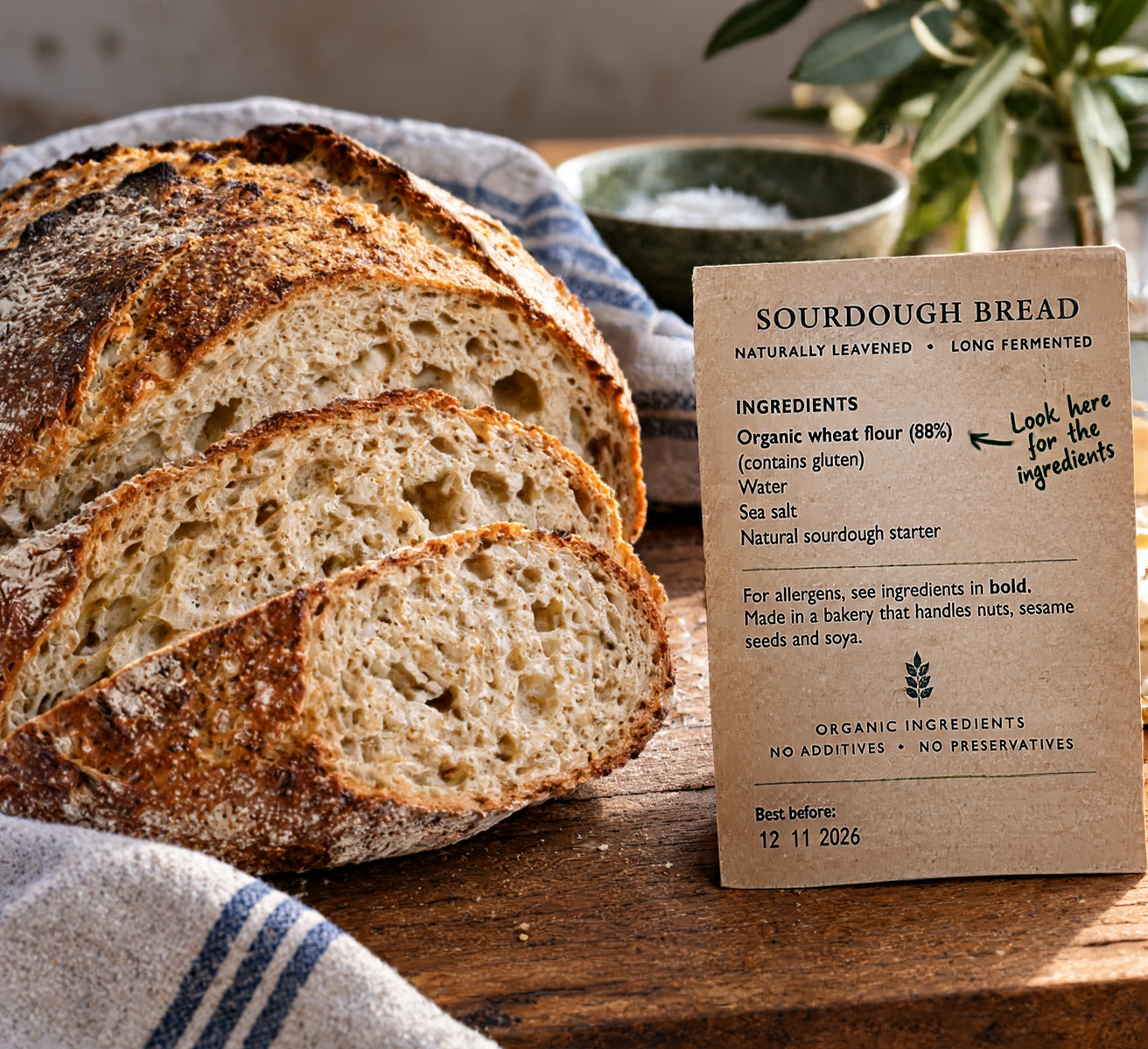
- Read the ingredients. Real sourdough is flour, water and salt, with the starter made from flour and water. Be wary of added yeast, vinegar, yoghurt or additives.
- Choose wholegrain when you can. White sourdough benefits from fermentation, but wholegrain gives you the fibre as well.
- Ask your baker. A good bakery will tell you how long the dough fermented and whether there is any commercial yeast.
- Compare the price. A bakery loaf may not cost much more per gram than a supermarket one.
- Freeze half. Sourdough keeps well, and slicing and freezing it means nothing is wasted.
Not sure which bread suits you? Send me a photo of the ingredients list and we’ll look at it together.
Prevention rather than cure.
Milvia Pili
Functional Nutritional Therapist