

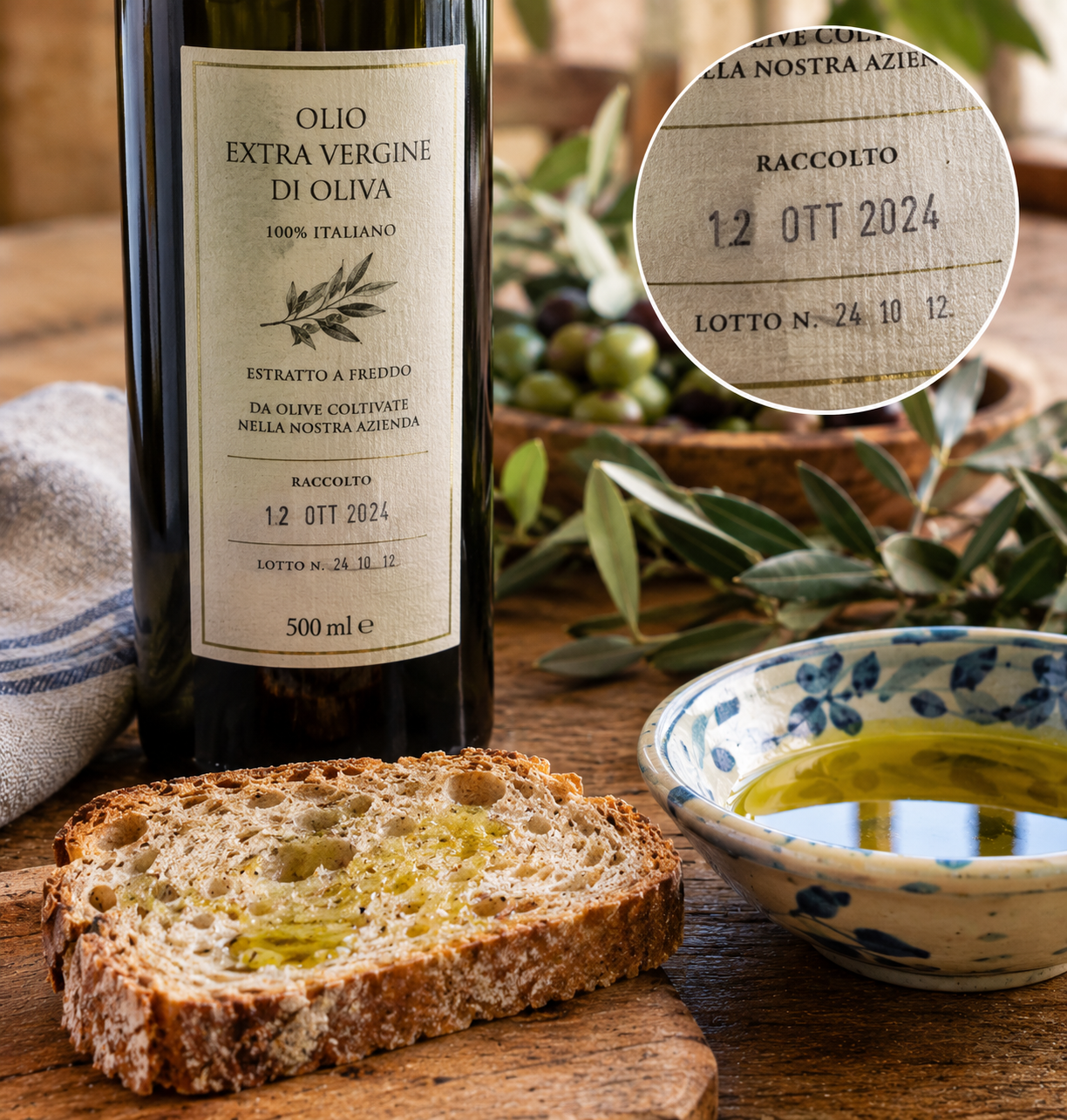
Everyone says olive oil is good for you. Few people ask the better question: which olive oil, and picked when? In Sardinia, autumn is the season when olives are harvested, and research suggests the timing changes what ends up in the bottle.
The part of olive oil that interests scientists studying ageing is its polyphenols, plant compounds such as hydroxytyrosol, oleuropein and oleocanthal. In laboratory and animal studies they have been linked to processes behind cellular ageing: they help neutralise oxidative stress, they calm the low-grade inflammation that builds with age, and they may reduce the signals sent out by senescent cells, the worn-out cells that linger and irritate their neighbours.
Now the honest part. A 2025 review of this research in the journal GeroScience found that most of the evidence comes from cell and animal studies, with only small human trials so far. Nobody has shown that olive oil polyphenols slow cellular ageing in people. What we have is a strong biological case, not a proven anti-ageing effect.
What we do have in humans is a very large pattern. A Harvard study followed about 92,000 American adults for 28 years. People who ate the most olive oil, around half a tablespoon or more a day, had 19% lower cardiovascular mortality, 17% lower cancer mortality and 29% lower neurodegenerative mortality than people who rarely or never ate it. Swapping margarine, butter, mayonnaise or dairy fat for olive oil was linked to lower risk. Swapping other vegetable oils was not. This is an association, and people who use more olive oil may live healthier lives in other ways, but the researchers adjusted for that and the results held.
This is where Sardinia comes in. A 2019 study in Food Chemistry measured the phenolic content of oils from Sardinian varieties across a 45-day harvest. As the harvest went on, the phenolics fell. In Semidana and Tonda di Cagliari they dropped sharply, from roughly 530 to 130 mg/kg and from roughly 510 to 140 mg/kg. Bosana held up better, from about 790 to 590. The authors concluded that some varieties should be picked earlier in the season. It is one study, and results vary with the year, the grove and the press, but the message is clear: the oil in your bottle is not simply “olive oil”.
So how do you choose a good one? Here is my checklist.
- Buy extra virgin. It is the top grade, extracted mechanically without taste defects. Oils labelled “pure”, “light” or simply “olive oil” are refined, and refining strips out most of the polyphenols.
- Look for a harvest date. It is optional on labels, but when shown, all the oil must come from that harvest. Choose the most recent you can find, and favour producers who print it. A best-before date alone tells you much less.
- Read the origin. It must be stated. “Blend of oils from more than one country” means a mix, and “bottled in Italy” is not the same as Italian olives. A protected designation, such as DOP on Italian oils, means a defined area and a set specification.
- Ignore the fancy phrases. “Cold extracted” means below 27°C, and “first cold pressing” legally refers to traditional presses, which most modern oils don’t use. I wouldn’t pay extra for either.
- Choose dark glass or a tin. Avoid clear glass and plastic. Buy a size you will finish, as air, light and heat all damage oil.
- Be sceptical of very low prices. Good oil is costly to make, so a deep discount deserves a second look.
- Trust your senses. A good oil smells fresh and fruity, tastes slightly bitter, and leaves a peppery catch at the back of the throat. A stale or waxy smell means it is past its best.
Then store it well. Keep it somewhere cool and dark, away from the hob, with the cap on. Unopened, it keeps for roughly 12 to 24 months from harvest, and once opened I’d aim to use it within a few months, and certainly within a year.
Finally, use it. Use it in place of butter and margarine, which is where the evidence points.
Not sure whether the oil in your cupboard passes the test? Send me a photo of the label and we’ll go through it together.
Prevention rather than cure.
Milvia Pili
Functional Nutritional Therapist