

We spend a fortune on creams to look younger. Meanwhile, from our thirties we are quietly losing muscle, and it matters far more for how well we age than any line on the face.
The British Dietetic Association says the average adult loses about 250 grams of muscle a year between 30 and 60, and from around 70 the loss speeds up to about 15% per decade. When it goes too far, it’s called sarcopenia, and the BDA puts it at 4 to 25% of free-living older adults in the UK. Less muscle means less strength, worse balance and more frailty. That is the difference between carrying your shopping up the stairs and needing help
Protein is part of the answer. The standard guideline for adults is about 0.75g per kilogram of body weight a day. But an international expert group on older adults, PROT-AGE, recommends at least 1.0 to 1.2g per kilogram for healthy people over 65, and more, 1.2g or above, for those who are active. People living with illness may need 1.2 to 1.5g. For someone weighing 70kg, 1.0 to 1.2g works out at 70 to 84g of protein a day, and many people eat less than that.
Now the honest part. Protein alone does not build muscle. A meta-analysis of 49 trials with 1,863 healthy adults found that protein supplements added only a modest extra gain to resistance training, about 0.3kg of muscle and 2.5kg of strength, and the benefit appeared to shrink with age. The benefit also levelled off at about 1.6g per kilogram a day. The BDA is clear that strength and balance exercise reduces frailty, and recommends at least three sessions of exercise a week. Protein is the building material. Exercise is the instruction to build.
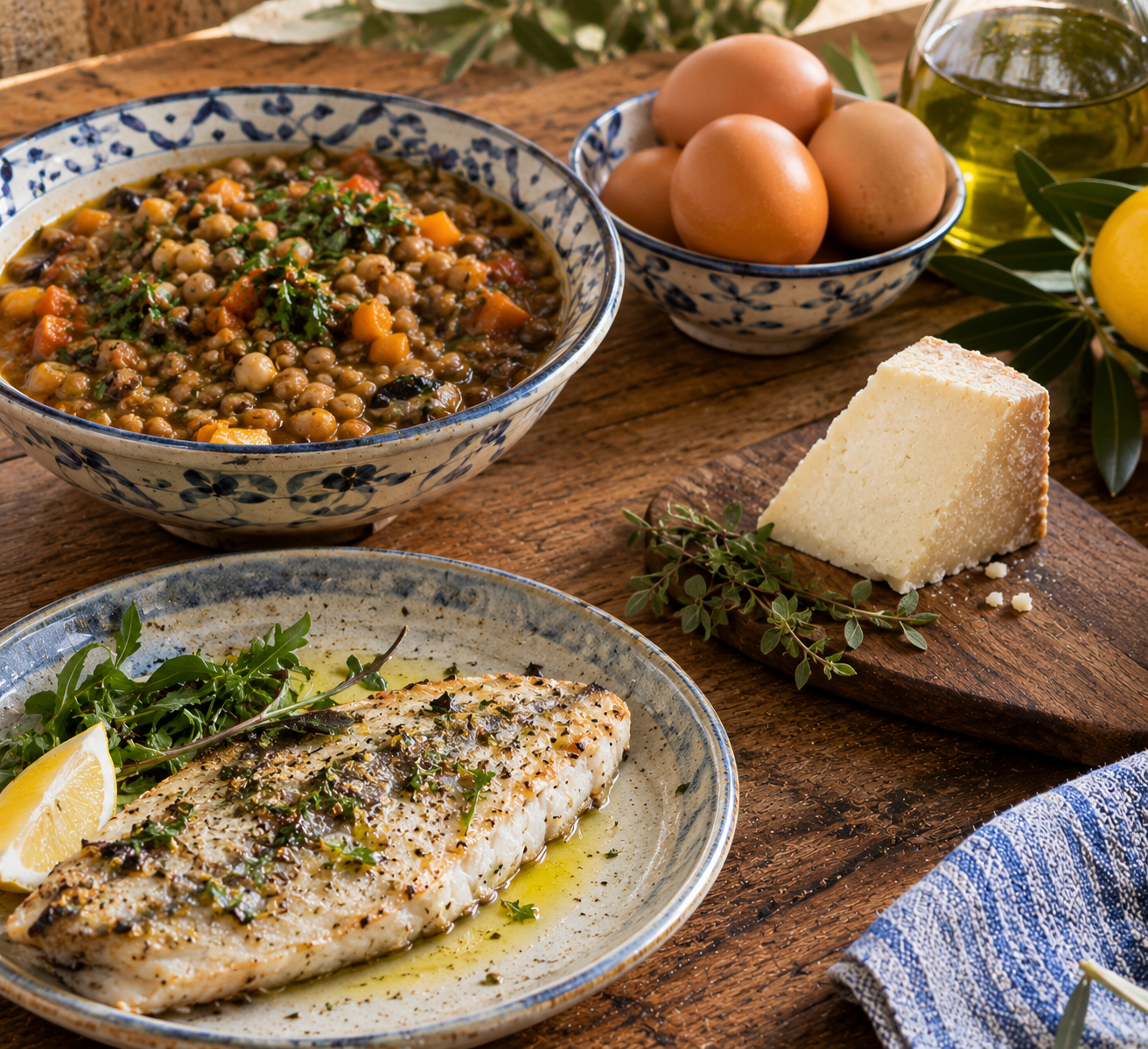
So where does protein come from? In my childhood in Sardinia it came from pulses, eggs from our own chickens, fish, and pecorino sardo, with meat only on special occasions. That pattern still works. Roughly, an egg gives you about 6g, 100g of cooked lentils or chickpeas about 8 to 9g, a portion of fish around 25 to 30g, and 40g of hard cheese around 10g. Put those across a day and you are well on the way, with fibre and good fats thrown in.
A few practical points. Spread protein across your meals rather than saving it all for dinner. Most people don’t need powders or supplements. If you have kidney disease, speak to your doctor before raising your protein, as people with severe kidney disease may need to limit it. And don’t forget vitamin D, which the BDA calls the most common nutritional deficiency in older adults, with 10 micrograms a day advised from October to March.
Your face will change as you age. Your strength is the part you can still do something about.
Wondering whether you’re eating enough protein for your age? Get in touch and we’ll work it out together.
Prevention rather than cure.
Milvia Pili
Functional Nutritional Therapist