


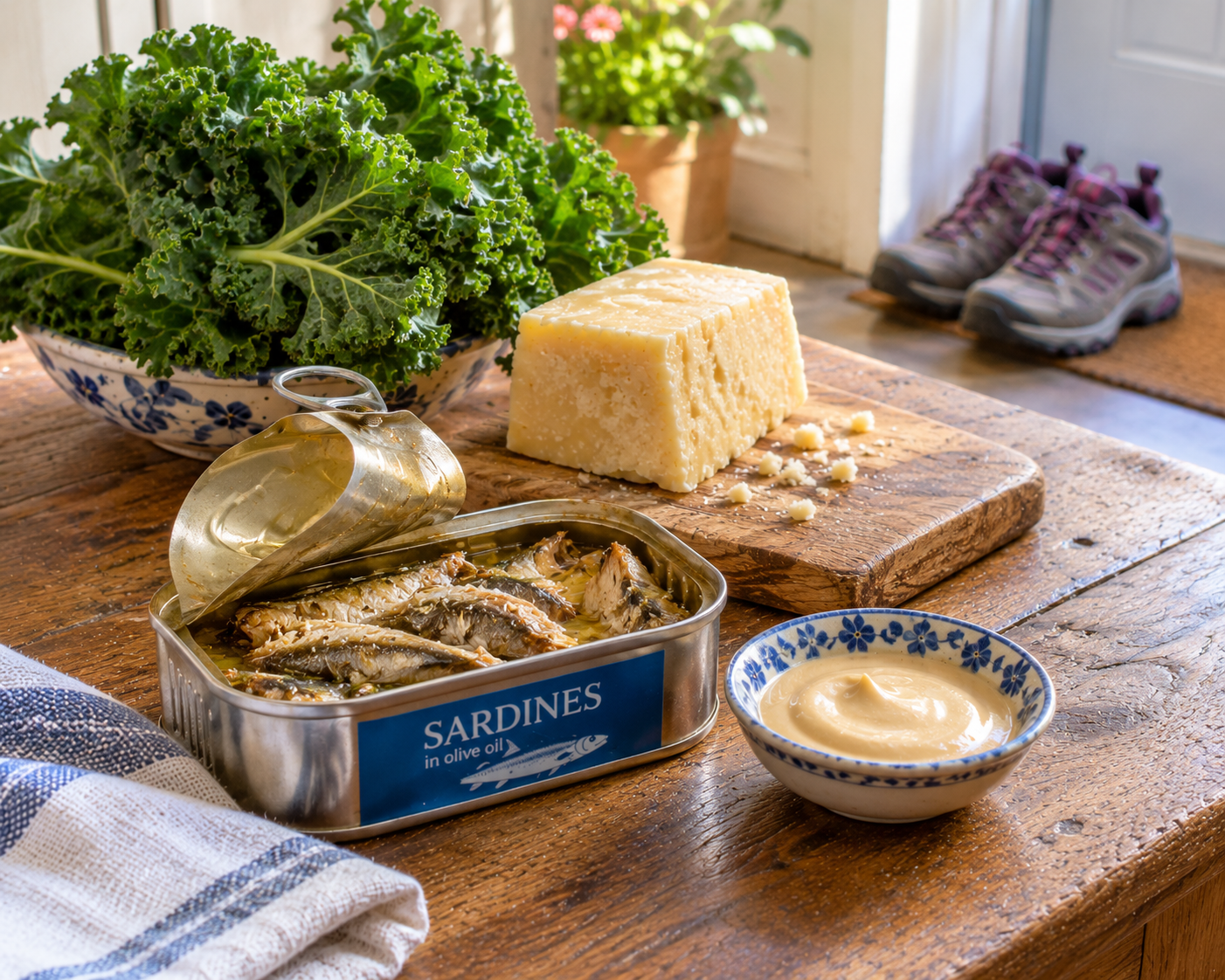
Nobody talks about their bones until one breaks. I’d rather we talked about them now, over a plate of sardines.
Age UK says about one in two women over 50 will fracture a bone because of osteoporosis. After the menopause, oestrogen falls and bone is lost quickly. That is a fact of life for women, and I find it better to know about it than to ignore it.
The good news is that bones respond to what we do, and a lot of it is simple and cheap.
Calcium first. The NHS says adults need 700mg a day, and that a normal diet should provide it. What does that look like? Using the average values on a hospital dietitian’s guide, half a tin (60g) of sardines with the bones gives about 258mg, a glass of milk or calcium-fortified soya drink about 240mg, and 30g of a hard cheese such as Cheddar about 222mg. Together that is around 720mg, before you’ve eaten a single vegetable. Values vary by brand, so check labels. (Personally, I substitute with coconut milk and don’t eat cheese, only Pecorino Sardo when I can get it).
Be careful with spinach. It looks calcium-rich, but the body can’t absorb all of it, so the NHS says it isn’t a reliable source. Curly kale is a better choice, along with tofu, tahini and sesame seeds.
Vitamin D does the other half. It helps bones absorb calcium. As we saw last week, from October to early March the UK sun is too weak to make it, so the NHS says everyone should consider 10 micrograms a day.
Then move. Weight-bearing exercise is best for bones: brisk walking, dancing, anything where you are on your feet. I don’t own a car, so my errands are my bone-building. Muscle-strengthening helps too, even at home with tins of food or bottles of water.
Here is what I would do:
- Aim for three calcium-rich foods a day. Sardines with the bones, dairy or a fortified alternative, tofu or tahini.
- Don’t count on spinach as your calcium.
- Take vitamin D from October to early March.
- Walk briskly every day, and do some strength work a couple of times a week.
- Food first. If you take calcium supplements, the NHS says 1,500mg a day or less is unlikely to cause harm, and more can upset your stomach.
- Ask your GP about your own risk. Some people are advised to take more calcium or other treatment, including HRT.
Prevention is far easier than repair after a fracture.
Not sure whether your plate is looking after your bones? Get in touch and we’ll go through it together and build a plan that fits your life.
Prevention rather than cure.
Milvia Pili
Functional Nutritional Therapist


