

On Monday we explored why blood sugar stability matters more after 40.
Today, let’s make it practical.
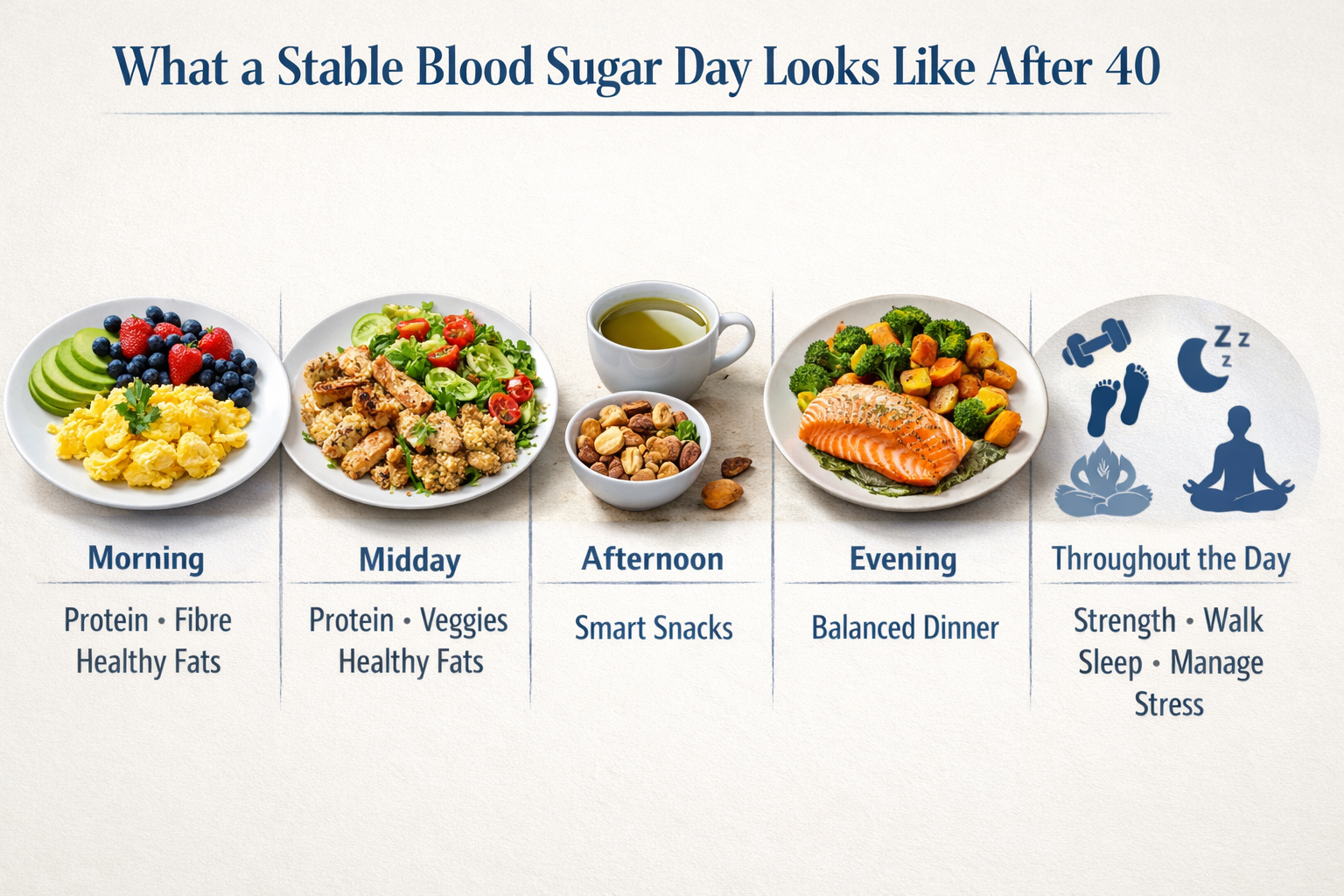
What does a stable blood sugar day actually look like?
Because this is not about dieting. It is about rhythm and consistency.
After 40, the body becomes less forgiving of spikes, crashes, skipped meals, and long gaps without nourishment. Muscle mass naturally declines, insulin sensitivity can shift, and stress tolerance often decreases.
Stability becomes strategy.
Morning
The day often sets the tone.
Avoid starting with caffeine on an empty stomach. Coffee alone can elevate cortisol and amplify blood sugar instability, particularly if you are already stressed.
Aim for a balanced breakfast within a reasonable window of waking.
Build it around:
Protein
Fibre
Healthy fats
Examples include eggs with vegetables and olive oil, Greek style yogurt (or Coconut yogurt) with seeds and berries, or a protein rich smoothie that includes fibre and fats.
The goal is steady energy, not a spike followed by a crash.
Midday
Do not skip lunch.
Long gaps without eating increase stress hormones and make afternoon cravings more likely.
Structure your plate around:
A solid protein source
Vegetables for fibre
Healthy fats
Optional complex carbohydrates depending on your activity levels
Eat without distraction if possible. Slowing down supports digestion and satiety.
Afternoon
If your energy dips, pause before reaching for sugar or another coffee.
Ask yourself:
Was breakfast low in protein?
Was lunch delayed?
Has stress been high?
Sometimes a small protein rich snack is enough to restore stability.
Evening
Finish eating at a reasonable time.
Balance fibre, protein, and fats in your final meal. Late night refined carbohydrates and ultra processed snacks commonly disrupt both blood sugar and sleep.
Sleep quality and blood sugar regulation are deeply connected. One affects the other.
Throughout the Day
Strength training improves insulin sensitivity.
Walking after meals supports glucose regulation.
Managing stress lowers cortisol driven instability.
Adequate sleep improves metabolic control.
Blood sugar stability is not built in a single meal. It is built across the entire day.
After 40, consistency matters more than intensity.
If your energy feels unpredictable, your cravings persistent, or your body composition harder to manage than it once was, it may be time to assess your daily rhythm.
If you would like help reviewing your current routine and creating a structured plan tailored to your physiology, I invite you to book a one to one consultation.
Small daily adjustments create long term metabolic resilience.
Warmly,
Milvia Pili
Functional Nutritional Therapy Practitioner