

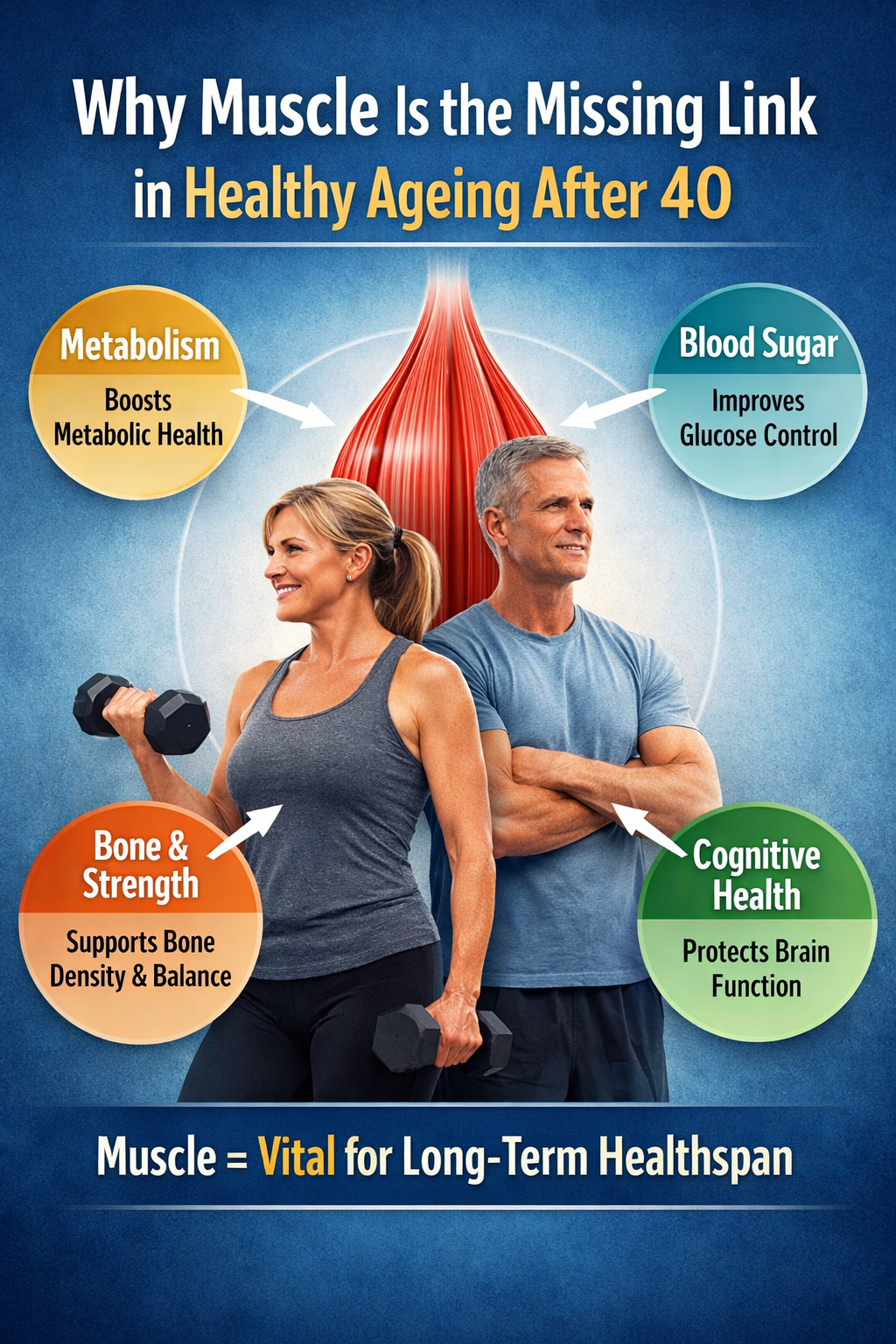
When we talk about ageing well, the conversation often revolves around hormones, supplements, skincare, or “anti-ageing” solutions. What is far less discussed — yet foundational to long-term health — is muscle.
After the age of 40, we naturally begin to lose muscle mass at a faster rate. This process, known as sarcopenia, isn’t just about strength or appearance. It affects metabolism, blood sugar regulation, bone density, balance, immune resilience, and even cognitive health.
Muscle is not just for movement.
It is a metabolic organ.
Healthy muscle helps regulate blood glucose, improves insulin sensitivity, supports mitochondrial function, and plays a protective role against chronic disease. This is why maintaining muscle is one of the strongest predictors of independence, vitality, and quality of life as we age.
Yet many people unknowingly work against it.
Chronic dieting, under-eating (especially protein), excessive cardio without strength work, poor sleep, and long-term stress all accelerate muscle loss. Add busy lifestyles and prolonged sitting, and muscle becomes one of the first systems to decline.
The good news is that muscle is highly responsive — even later in life.
Supporting muscle after 40 does not require extreme training or rigid routines. It requires consistency and the right foundations:
- Adequate protein intake, spread across the day
- Regular resistance or strength-based movement
- Proper recovery, sleep, and nervous system support
- Nutrition that fuels the body rather than depletes it
In Blue Zones such as Sardinia, muscle preservation happens organically. Daily walking, carrying, standing, and purposeful movement are woven into everyday life. Strength is functional, sustainable, and maintained well into older age.
Healthy ageing is not about chasing youth.
It is about protecting function.
Muscle allows us to remain active, metabolically healthy, and independent for longer. Without it, no supplement, hormone, or short-term intervention can truly compensate.
If you are over 40 and feeling weaker, more tired, or less resilient than you used to, it may not be “just ageing.” It may be a sign that your body needs better support.
Building and maintaining muscle starts with understanding what your body needs — nutritionally, metabolically, and lifestyle-wise. Small, personalised changes can make a significant difference over time.
If you would like guidance on how to support muscle health in a way that fits your real life, I invite you to explore working together or simply start by reassessing how you nourish, move, and recover each day.
Warmly,
Milvia Pili, FNTP
Functional Nutritional Therapist Practitioner