
Growing up in Sardinia, nobody in my family ever used the word “healthy” about what we ate. It was just food. But looking back now, with everything I know professionally, I can see how genuinely varied it was, and how rare that variety has become.
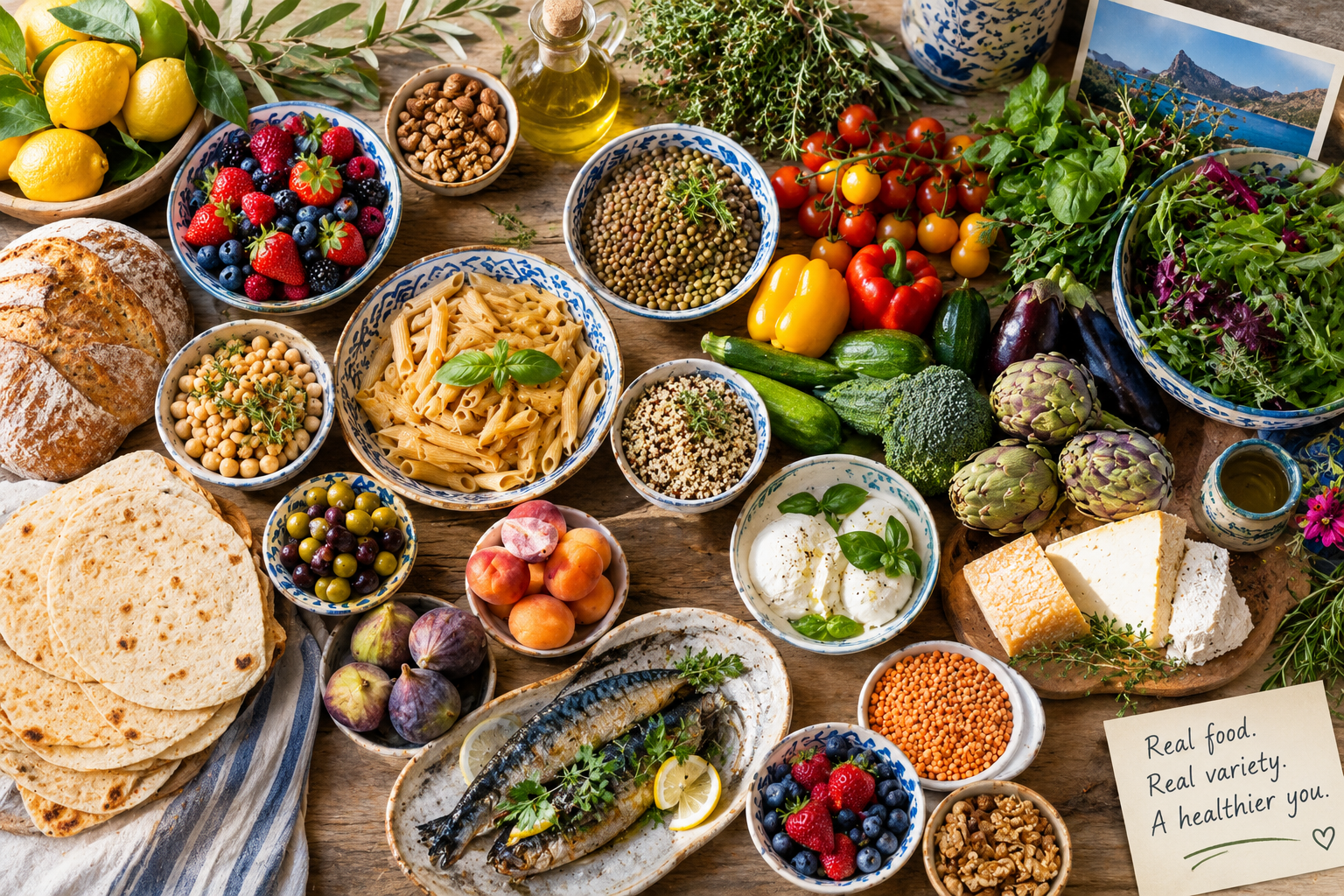
My mother cooked every morning before work, so lunch was always ready when I got home from school. She made pasta by hand regularly, ravioli, tagliatelle, spaghetti, and the Sardinian staples, malloreddus, fregula sarda, culurgiones. We ate pane carasau and civraxiu, my favourite, and pecorino sardo. In winter there were beans and pulses in soups and stews, then Sardinian artichokes, then broad beans a little later in the season. We kept chickens, so there were always fresh eggs, which my mother used in cakes and biscuits. We ate fish regularly. Meat was only for special occasions, Christmas, Easter, a birthday here and there, porceddu, Sardinian roast pork.
And then there was the orchard. My parents grew almost everything themselves, so we ate whatever was in season, pomegranates in autumn, oranges and lemons and mandarins through winter, cherries at the end of May, then figs, apricots, peaches, prunes.
None of this felt remarkable at the time. It was simply what was available, cooked the way it had always been cooked. But by any modern measure, it was an extraordinarily varied diet, dozens of different foods across a single week, changing constantly with the seasons.
Compare that to how many people eat now. Even someone who considers themselves a healthy eater often rotates through a surprisingly small number of staples, the same vegetables, the same grains, the same proteins, week after week, because it’s convenient, familiar, or simply what’s easiest to source. It can look healthy on paper and still be far narrower than it seems.
That narrowness matters more than people realise, and this is where it connects directly to healthy ageing. Your gut microbiome depends on variety, a wide range of different fibres and plant compounds feeding a wide range of different bacteria. A narrow diet, however “clean”, tends to produce a narrower, less diverse microbiome, and microbiome diversity is increasingly linked to better metabolic health, stronger immune function, and even mood. Variety isn’t a nice-to-have. It’s doing real, measurable work.
This is exactly the kind of thing I look at with clients, not just whether what’s on the plate is “healthy” in the abstract, but how wide a range it actually covers. Most people could do far more for themselves simply by expanding what they already eat, rather than overhauling it entirely.
You don’t need a childhood in Sardinia to eat this way. You need to actually look at what’s in rotation on your own plate, and where it’s gone narrow without you noticing.
If you’d like a proper look at the range and variety of what you’re eating, get in touch and let’s start there.
Prevention rather than cure.
Milvia Pili
Functional Nutritional Therapist