
A client came to me a while back, frustrated and a little bewildered. She couldn’t lose weight, and she genuinely couldn’t understand why. On paper, she felt like she was doing everything right.
This is exactly why I start every new client with a full one-hour consultation, not a quick chat, a proper look at medical history, lifestyle, and diet together. Weight issues rarely have one obvious cause, and you don’t find the real one by skimming the surface.
We went through her medical history first, nothing unusual there. Then we got into her diet, and she told me her last meal of the day was always fruit. “I only eat fruit,” she said. “I don’t get it. I’m overweight, and I only eat fruit.”
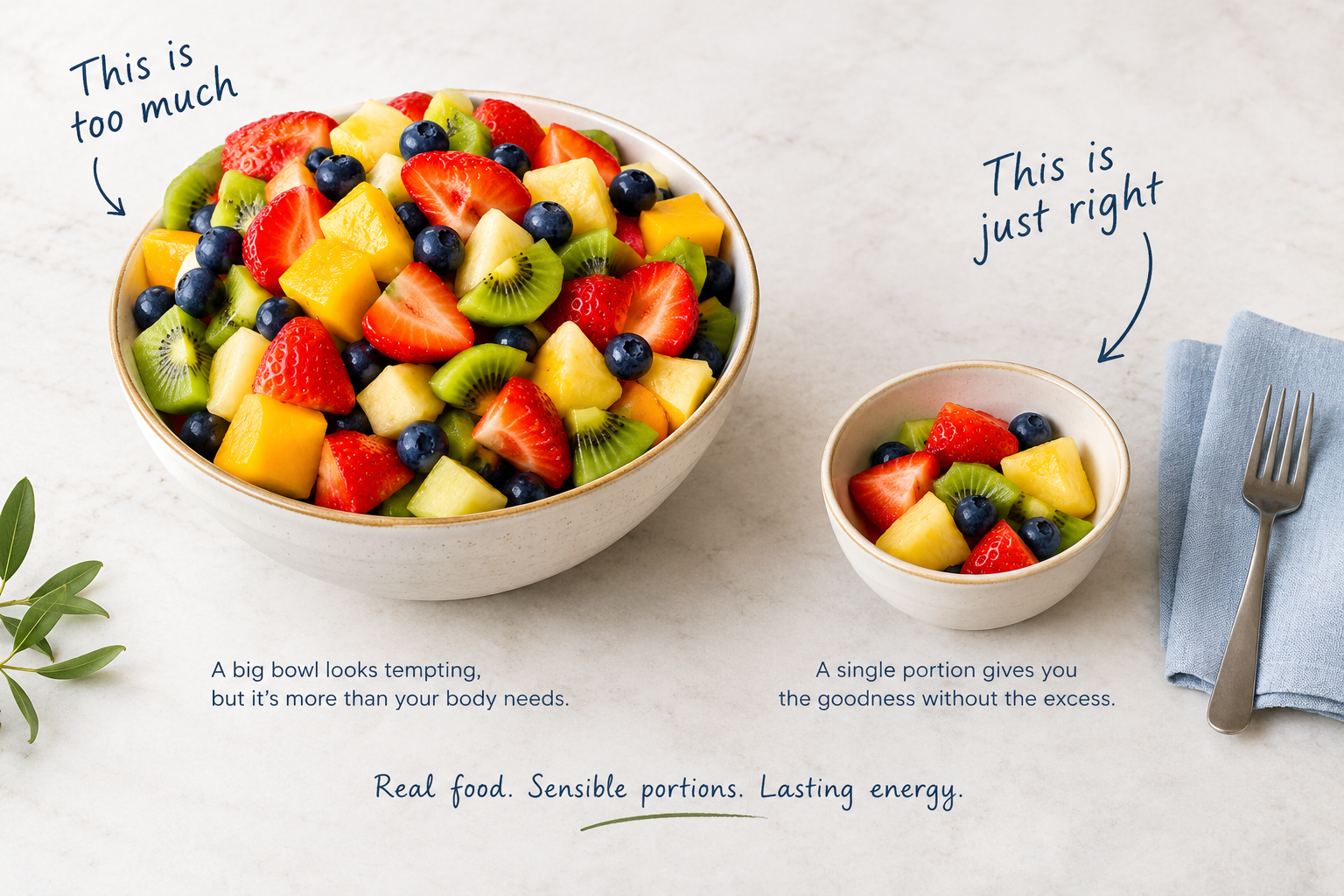
I asked her to describe it properly. She was making a fruit salad, she said. When I asked to see it, she showed me the container. It was a large salad bowl, filled to the top, every day. Enough fruit for eight people, easily, all in one sitting.
That alone was a significant amount of natural sugar. But I kept going, because one detail rarely tells the whole story. Scattered through her day, she mentioned, almost as an afterthought, a small packet of crisps here, a Kit Kat now and again. Nothing that felt significant to her. Just small things.
None of it felt like “eating badly” to her, because none of it matched what she thought of as unhealthy food. There was no fast food, no ready meals, no obvious culprit. Just fruit, and a few small extras she’d barely registered as part of her diet at all.
This is one of the things I see most often in this work, and I want to be clear, there’s no judgement in it. Nobody sits down and decides to eat an eight-person fruit salad. It happens gradually, portion by portion, without anyone noticing the scale of it, because fruit “counts” as healthy and small snacks don’t feel like they count at all.
But the body doesn’t judge food by what we call it. A very large quantity of fruit is still a very large quantity of sugar, however natural. A few small extras, repeated daily, add up to more than they seem to in the moment.
This matters for more than weight. Consistently high sugar intake, even from sources that feel virtuous, affects blood sugar regulation, inflammation, and energy over time, all of which play into how well the body ages. It’s rarely one meal. It’s the pattern, repeated for years, that quietly shapes long-term health.
Once we adjusted the portion size and looked properly at what was happening across her whole day, not just the parts she’d noticed, things started to shift.
This is exactly why I don’t work from a food list or a generic plan. I look at what’s actually happening, not what someone assumes is happening, because the two are very often different, and the gap between them is usually where the real answer is.
If you’ve ever thought “I eat well, so why isn’t this working?”, it might be worth finding out what’s actually on your plate, not what you think is on it.
Prevention rather than cure.
Milvia Pili
Functional Nutritional Therapist