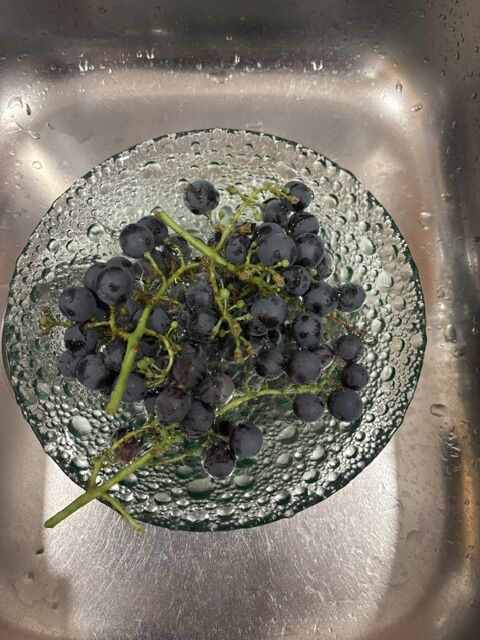

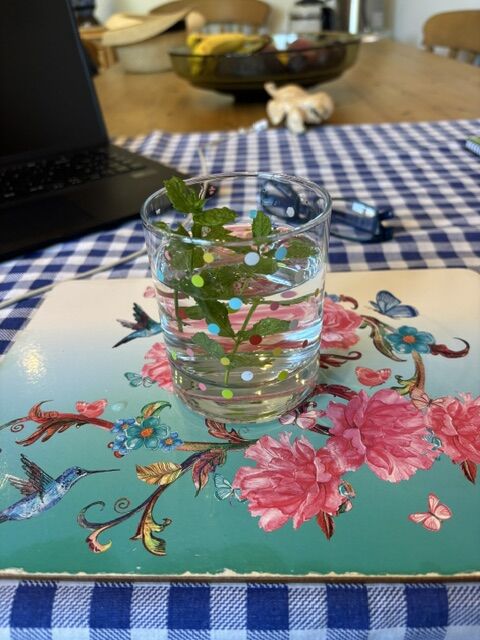
I still forage. Not just when I’m back in Sardinia, wherever I am. Here in the UK, I pick berries, blackberries, raspberries, and whatever else is in season along the hedgerows, hazelnuts, wild garlic when I know where to look, and elderflower, which I use for cordials and to flavour my water, alongside mint I grow on my own patio. I’ve had an allotment. I’ve picked wild grapes and even passion fruit on ordinary walks, simply because they were there. There’s also a real variety of wild mushrooms out there for those who know what they’re doing, though that’s not something I forage myself.
People sometimes assume this is sentimentality, a nice throwback to childhood. It isn’t, or not only that. I learned to forage from my mother, who did it with her friends when I was small in Sardinia. Every Sunday we’d travel up to the mountains for spring water, and while our parents collected it, my sister and I picked wild strawberries, corbezzoli, straight off the bushes. That’s where it started for me. But I’ve kept doing it as an adult, decades later and in a completely different country, because it still serves the same purpose it always did.
Foraged and home-grown food hasn’t travelled for days, hasn’t sat in storage, hasn’t been bred primarily for shelf life over nutrient content. It’s about as fresh and nutrient-dense as food gets, picked at the point it’s ready, eaten close to that same point. That matters more than people think. Nutrient density isn’t fixed the moment something is harvested, it degrades with time, transport, and storage, which means a lot of what looks like a healthy diet on paper is quietly less nutritious by the time it reaches a plate.
This is exactly the gap I look for in client work: not whether someone is eating vegetables, but how fresh, how varied, and how nutrient-dense what they’re eating actually is. Most people could dramatically increase what they’re getting from food without eating more of it, simply by eating it fresher and more varied, and most people have no real way of knowing where their own plate falls short until someone actually looks.
That’s what I do with clients. I look at what’s genuinely on your plate, not what you think should be on it, and show you exactly where the gaps are and how to close them. You don’t need a mountainside in Sardinia to eat this way. You need to know what you’re actually working with.
If that’s something you’d like a proper look at, get in touch and let’s start there.
Prevention rather than cure.
Milvia Pili
Functional Nutritional Therapist